
Hotel Amenities Procurement Guide: Toiletries, Slippers & Beyond
Published by Galaxy Hotel Supplies | For Hotel Procurement Managers
Guest room amenities are among the most personal touchpoints in the hotel experience. A beautifully packaged toiletry set, a pair of comfortable slippers, or a thoughtfully chosen vanity kit communicates care and quality at the moment guests are most receptive — when they first enter their room and begin to settle in.
Yet amenities procurement is frequently managed as an afterthought: a quick reorder of whatever was purchased last time, or a price-driven decision made without reference to guest expectations, brand positioning, or the total cost implications of poor-quality products.
This guide gives hotel procurement managers a complete framework for guest room amenities procurement — covering toiletries, slippers, bathrobes, vanity kits, dental kits, and beyond — with the specification detail, supplier evaluation criteria, and operational considerations needed to make confident, strategic sourcing decisions.
1. Why Amenities Procurement Deserves Strategic Attention
Amenities represent a relatively small share of total hotel procurement spend — but a disproportionately large share of guest perception. Research consistently shows that guests notice, comment on, and review amenity quality. A premium toiletry set generates positive social media posts. A cheap, poorly packaged shampoo bottle generates complaints.
Beyond guest experience, amenities procurement has become increasingly complex:
Regulatory change is accelerating. Single-use plastic restrictions are now in force across the EU, UK, parts of Asia, and multiple US states — with more markets following. Amenity packaging specifications are no longer purely a brand decision; they are a compliance requirement in many markets.
Sustainability expectations are rising. Hotel guests — particularly in premium and luxury segments — expect amenities to reflect the same environmental values they apply in their own lives. Paraben-free formulations, cruelty-free testing, recyclable packaging, and natural ingredients have moved from differentiators to baseline expectations in many segments.
Brand partnerships add complexity. Many properties source branded amenity collections from premium cosmetics partners. Managing these relationships — including minimum volume commitments, co-branding requirements, and exclusivity terms — requires procurement discipline that goes beyond standard supplier management.
2. Toiletries: Formulation, Packaging & Compliance
Formulation Standards
The formulation of toiletry products — shampoo, conditioner, body wash, body lotion, soap — determines how they perform for guests and how they align with your brand values.
Key formulation criteria to evaluate:
Ingredient quality: Premium formulations use higher concentrations of active ingredients (natural oils, botanical extracts, conditioning agents) and lower concentrations of fillers. Request the full ingredient list (INCI list) from every supplier — not just marketing descriptions.
pH balance: Shampoos and body washes should be pH-balanced (4.5–5.5 for hair; 5.0–6.0 for skin) to protect the hair cuticle and skin barrier. Poorly formulated products with incorrect pH cause dryness, irritation, and negative guest feedback.
Fragrance: Fragrance is one of the most powerful sensory elements of an amenity experience. It should be distinctive, appropriate to your brand positioning, and consistent across the full amenity range. Request fragrance samples before committing to a full range order.
Preservative system: Preservatives prevent microbial contamination but are a source of guest sensitivity concerns. Parabens (methylparaben, propylparaben) are the most common preservatives in conventional formulations — and the most commonly requested to be avoided. Confirm whether your supplier offers paraben-free alternatives, and verify the alternative preservative system is effective and safe.
Natural and organic content: If positioning amenities as natural or organic, require certification (COSMOS Organic, COSMOS Natural, or Ecocert) — not just marketing language. Unverified “natural” claims are a greenwashing risk.
Packaging Options
Amenity packaging has undergone rapid transformation in response to single-use plastic regulation and sustainability demand. The main options currently in use:
Miniature bottles (30–40ml): The traditional hotel amenity format. Highly familiar to guests; convenient for use and travel. Under increasing regulatory pressure in many markets due to single-use plastic content.
Bulk dispensers (wall-mounted): Permanently installed dispensers refilled from bulk containers. Eliminate single-use packaging entirely; significant reduction in cost-per-use. Requires investment in dispenser hardware and installation. Guest acceptance varies by property tier — well-received in lifestyle and eco-positioned properties; more resistance in traditional luxury segments.
Large-format refillable bottles (200–300ml): A middle ground between miniatures and fixed dispensers. Placed in the bathroom and replenished or replaced at checkout. Reduces packaging waste significantly while maintaining the familiar bottle format. Growing adoption across upscale and luxury tiers.
Solid formats (bar soap, solid shampoo bars, conditioner bars): Zero liquid packaging; minimal or no plastic. Increasingly popular in eco-conscious properties. Solid shampoo and conditioner performance has improved significantly — request samples and guest trial before committing.
Compostable or biodegradable packaging: Packaging made from plant-based materials (PLA, sugarcane, paper) that breaks down in composting conditions. Verify that compostability certification (EN 13432, ASTM D6400) is genuine and that local composting infrastructure can process the material.
Regulatory compliance check: Before specifying any plastic packaging, confirm current regulations in every market where your properties operate. Single-use plastic restrictions vary significantly by jurisdiction and are changing rapidly. Build a compliance review into your annual amenities procurement cycle.
Volume and Yield
Amenity cost is partly a function of product volume and formulation concentration. A 30ml bottle of well-formulated shampoo used by one guest delivers better value than a 40ml bottle of dilute formulation that requires double application.
Request yield data from suppliers — specifically, the number of uses per bottle under normal application conditions. A higher-concentration formulation at a higher unit price may deliver lower cost-per-use than a cheaper, more dilute alternative.
3. Soap: Bar vs. Liquid
Soap is the most universal amenity item and the one with the greatest range of quality variation.
Bar Soap
Milled soap (triple-milled): The premium standard. Triple milling produces a dense, smooth, long-lasting bar with a fine lather. Hardness and smoothness are the key quality indicators — a soft, easily crumbled bar is a sign of poor milling or excessive water content.
Glycerin soap: Transparent or translucent; moisturising. Popular in spa and wellness settings.
Hotel bar size: Standard hotel bar soap is 15–20g for single-use presentation; 30–40g for multi-night stays. Specify size relative to your expected length of stay and change frequency policy.
Packaging: Individually wrapped bars in paper or cardboard are preferred over plastic wrapping for sustainability and aesthetic reasons. Embossed or printed paper wraps with your brand or a quality supplier brand communicate quality at first glance.
Liquid Soap
For properties using pump dispensers or fixed wall dispensers, liquid hand soap formulation should match the quality level of your broader toiletry range. pH balance, fragrance consistency, and moisturising agent content are the key quality criteria.
4. Slippers: Comfort, Durability & Specification
Guest room slippers are a high-visibility amenity that guests interact with for extended periods — and frequently take home, making them an ongoing brand ambassador.
Slipper Types
Open-toe terry slippers: The most widely used hotel slipper. Lightweight, breathable, and familiar. Terry fabric on the upper; EVA or rubber sole.
Closed-toe terry slippers: More coverage; preferred in colder climates or for properties where guests may use slippers in corridors or shared spaces.
Waffle weave slippers: Lighter than terry; quick-drying; increasingly popular in spa and resort settings.
Velour slippers: Soft, premium feel; more luxurious appearance than terry. Higher cost; appropriate for upscale and luxury tiers.
Disposable vs. reusable: Disposable slippers (single-use, lightweight construction) reduce laundry costs but increase waste. Reusable terry or velour slippers are laundered between guests — higher per-unit cost but lower total cost at sufficient occupancy, and significantly better guest experience. Consider guest take-home rate when calculating true cost of reusable vs. disposable.
Key Specification Criteria
Sole construction: EVA (ethylene-vinyl acetate) soles offer the best balance of cushioning, grip, and durability. Rubber soles are more durable but heavier. Avoid thin foam soles — they compress and lose cushioning quickly, delivering poor guest comfort.
Non-slip sole: Essential for bathroom safety. Confirm that the sole material provides adequate grip on wet tile surfaces — request slip resistance test data or conduct your own wet tile test.
Size: Most hotel slippers are produced in a universal size (typically fitting EU 36–45). For luxury properties, consider offering two sizes (small and large) or a size range.
Sole thickness: Minimum 8mm for adequate comfort; 10–12mm for premium feel.
Upper construction: Terry loop density determines softness and durability. Request GSM data for terry uppers — 300–400 GSM is standard; 400+ GSM for premium tiers.
Embroidery and branding: Logo embroidery on the upper is standard for branded slippers. Specify thread colour, stitch count, and placement. Embroidery should be flat and smooth — raised embroidery can cause discomfort.
5. Bathrobes: Specification & Procurement
Bathrobes are among the highest-value amenity items in terms of guest perception — and among the highest-cost items in terms of procurement and laundry.
Robe Types
Terry robe: The classic hotel bathrobe. Absorbent, durable, and familiar. Available in varying GSM and collar styles (shawl collar, kimono, hood).
Waffle weave robe: Lighter than terry; quick-drying; increasingly popular in spa and resort settings. Less absorbent but more elegant in drape.
Velour robe: Sheared terry on the exterior for a soft, velvety finish. Premium feel; suitable for luxury tiers. Requires more careful laundering than standard terry.
Microfleece robe: Extremely soft synthetic option; excellent insulation; quick-drying. Popular in colder climates and ski resort properties.
Key Specification Criteria
GSM: The primary quality indicator for terry and waffle robes:
| Robe Type | Recommended GSM |
|---|---|
| Standard terry | 350–420 GSM |
| Premium terry | 420–500 GSM |
| Luxury terry | 500–600 GSM |
| Waffle weave | 200–280 GSM |
Fiber content: 100% cotton for terry and waffle robes — cotton is breathable, absorbent, and suitable for industrial laundering. Cotton-polyester blends reduce cost but compromise absorbency and feel.
Belt and loops: Belt should be long enough to tie comfortably across a range of body sizes. Belt loops should be reinforced — this is the most common point of robe failure under repeated laundering. Double-stitched loops are mandatory.
Pocket construction: Patch pockets are standard; confirm pocket depth (minimum 15cm) and seam reinforcement.
Sizing: Standard hotel robes are produced in one universal size. For luxury properties, consider offering small/medium and large/XL options — or a single generous cut that accommodates a wider range of guests comfortably.
Laundering protocol: Request specific laundering instructions from your supplier. Over-drying is the most common cause of terry robe degradation — moisture sensors on tumble dryers are particularly important for robes given their weight and drying time.
6. Vanity and Dental Kits
Vanity Kits
A standard vanity kit typically includes: cotton buds, cotton pads, nail file, shower cap, and a sewing kit. Quality and presentation vary enormously between suppliers.
Specification criteria:
- Packaging: Box or pouch presentation; paper or cardboard preferred over plastic for sustainability
- Cotton buds: Paper-stemmed (plastic-stemmed cotton buds are banned or restricted in many markets)
- Shower cap: Adequate diameter (minimum 45cm) to cover a range of hair volumes; elastic should be firm but comfortable
- Nail file: Emery board minimum; glass nail file for luxury tiers
- Sewing kit: Minimum 4 thread colours (black, white, navy, neutral); needle count and quality reflect the overall kit standard
Dental Kits
A standard dental kit includes a toothbrush and toothpaste. Quality of both items directly affects guest perception.
Toothbrush specification:
- Soft bristles are the universal recommendation (medium and hard bristles cause gum damage)
- Biodegradable or bamboo handles are increasingly expected in sustainability-conscious properties
- Individually wrapped or packaged in a recyclable sleeve
Toothpaste specification:
- Minimum 15ml for a single use; 20–25ml for multi-night availability
- Fluoride content should comply with local regulatory requirements (varies by market)
- Natural or SLS-free formulations available for properties with wellness positioning
7. Sustainable Amenities — Moving Beyond Compliance
Sustainability in amenities procurement has moved beyond regulatory compliance to become a genuine brand differentiator — and a guest expectation in premium segments.
Key sustainability criteria for amenities:
Packaging: Eliminate single-use plastic where regulation requires or brand values support. Recyclable, compostable, or bulk refillable formats should be the default specification for new procurement cycles.
Formulation: COSMOS-certified natural or organic formulations; paraben-free and sulphate-free options; cruelty-free (Leaping Bunny certified); vegan formulations where applicable.
Supply chain: Fair Trade or Rainforest Alliance certification for ingredient sourcing (particularly relevant for palm oil, shea butter, and other commonly sourced commodity ingredients).
Concentration: Higher-concentration formulations use less product per use — reducing both cost and environmental impact. Concentrated solid formats (shampoo bars, conditioner bars) eliminate water content and packaging simultaneously.
Local sourcing: Some properties partner with local artisan soap makers or regional cosmetics brands — reducing transport emissions, supporting local economies, and creating a distinctive, place-specific amenity experience that branded collections cannot replicate.
8. Brand Partnership vs. Own-Label Amenities
Many upscale and luxury hotels partner with premium cosmetics brands (Molton Brown, L’Occitane, Bamford, Aesop, and similar) for their amenity programmes. This decision has significant procurement implications.
Brand partnership advantages:
- Instant premium perception — recognised brands signal quality to guests
- Marketing value — guests share branded amenity photos on social media
- Product quality assurance — established brands maintain consistent formulation standards
- No formulation development investment required
Brand partnership disadvantages:
- Significantly higher unit cost than own-label equivalents
- Minimum volume commitments and exclusivity terms can limit flexibility
- Brand positioning must align with your property’s identity — a mismatch undermines both brands
- Limited customisation — own branding is typically restricted to co-branding arrangements
Own-label advantages:
- Full brand control — formulation, packaging, fragrance, and presentation aligned entirely with your identity
- Lower unit cost than premium brand equivalents at sufficient volume
- Differentiation — guests cannot buy your amenities elsewhere
- Flexibility to reformulate, repackage, or change fragrance without brand partner approval
Own-label disadvantages:
- Requires minimum order volumes to achieve cost-effective production (typically 10,000+ units per SKU)
- Formulation and packaging development investment
- No brand recognition benefit — quality must be communicated through product experience alone
Decision framework: For properties with strong brand identity and sufficient volume, own-label amenities typically deliver better value and differentiation. For properties seeking an instant quality signal or lacking the volume for own-label economics, a brand partnership is a sound choice — provided the brand aligns with your positioning and the commercial terms are carefully negotiated.
9. Supplier Evaluation Checklist
- [ ] Can they provide full INCI ingredient lists for all toiletry formulations?
- [ ] Do they hold OEKO-TEX®, COSMOS, Leaping Bunny, or other relevant certifications — and are they current and verifiable?
- [ ] Is their packaging compliant with single-use plastic regulations in your operating markets?
- [ ] Can they provide recyclable, compostable, or bulk refillable packaging options?
- [ ] What is their MOQ per SKU, and can they supply consistent formulation and packaging across reorder cycles?
- [ ] Do they offer custom fragrance, formulation, or packaging for own-label programmes?
- [ ] What is their lead time for first orders and repeat orders?
- [ ] Can they provide stability and safety test data for toiletry formulations?
- [ ] Do they have experience supplying comparable hotel properties or groups?
- [ ] What is their policy on formulation changes — will they notify you before changing ingredients?
10. Pre-Order Protocol
- Request a full amenity sample set — one of every item in the proposed range, in final packaging
- Conduct a fragrance and formulation review — involve your F&B and housekeeping teams, and where possible, a small guest panel
- Test packaging compliance — confirm recyclability, compostability, or plastic content against current regulations in your operating markets
- Assess presentation quality — place the full amenity set in a guest bathroom and photograph it; review against your brand standards
- Run a performance test — use the toiletries personally or with a small staff panel; assess lather, rinse, skin and hair feel, and fragrance longevity
- Verify certifications independently — certificate numbers for COSMOS, Leaping Bunny, and OEKO-TEX® should be verifiable through the issuing body’s online database
- Confirm regulatory compliance — cross-reference packaging and ingredient specifications against applicable regulations in each market
- Pilot in a limited room block — deploy the full amenity set in 10–20 rooms for 4 weeks; collect guest feedback through comment cards or post-stay surveys
- Negotiate terms before committing — MOQ, lead times, reformulation notification, and price stability over the contract period should all be confirmed in writing
Summary
Guest room amenities are a small line item in the hotel procurement budget with outsized influence on guest perception, online reviews, and brand positioning. The properties that manage this category strategically — specifying formulations with rigour, aligning packaging with regulatory requirements, choosing the right brand or own-label strategy, and selecting suppliers who can deliver consistency over time — create amenity experiences that guests remember and return for.
The properties that treat it as a reorder function miss an opportunity that costs relatively little to capture — and increasingly exposes them to regulatory risk, sustainability criticism, and guest disappointment when it is managed poorly.
Use this guide as the foundation for a structured, strategic approach to amenities procurement — and review it annually as regulations, guest expectations, and sustainable packaging options continue to evolve.
Galaxy Hotel Supplies supplies premium hotel amenities — toiletries, slippers, bathrobes, and vanity kits — to hospitality brands worldwide, with custom branding, sustainable packaging options, and bulk supply programs. Contact our team for samples, custom specifications, or a procurement consultation.
- #HotelProducts
- #HospitalityTrends
- #HotelBranding
- #B2BHospitality
- #LuxuryHotelBedding
- #CommercialTextiles
- #LuxuryHotels
- #HotelDesign
- #HotelStyle
- #LuxuryTowels
- #HotelRoomDesign
- #HotelManagement
- #PremiumLinens
- #ShowroomTour
- Eliya
- #HotelDecor
- Galaxy
- #GuestSatisfaction
- #HospitalityLinen
- #HospitalityExpo
- #HotelComfort
- #LuxuryHotelSupplies
- #LuxuryLinens
- #HotelIndustry
- #LuxuryHotel
- #HotelAmenities
- #TradeShow
- #HospitalityTextiles
- #HotelTowels
- #HospitalityDesign
- #LuxuryBedding
- #HotelBedding
- #HotelLinens
- #HotelOperations
- #GALAXYHotelSupplies
- #HotelLinen
- #LuxuryHospitality
- #GuestComfort
- #GuestExperience
- #HotelTextiles
- #HotelProcurement
- #HospitalityIndustry
- #HospitalitySupplies
- #HotelSupplies
- #GALAXYHospitality
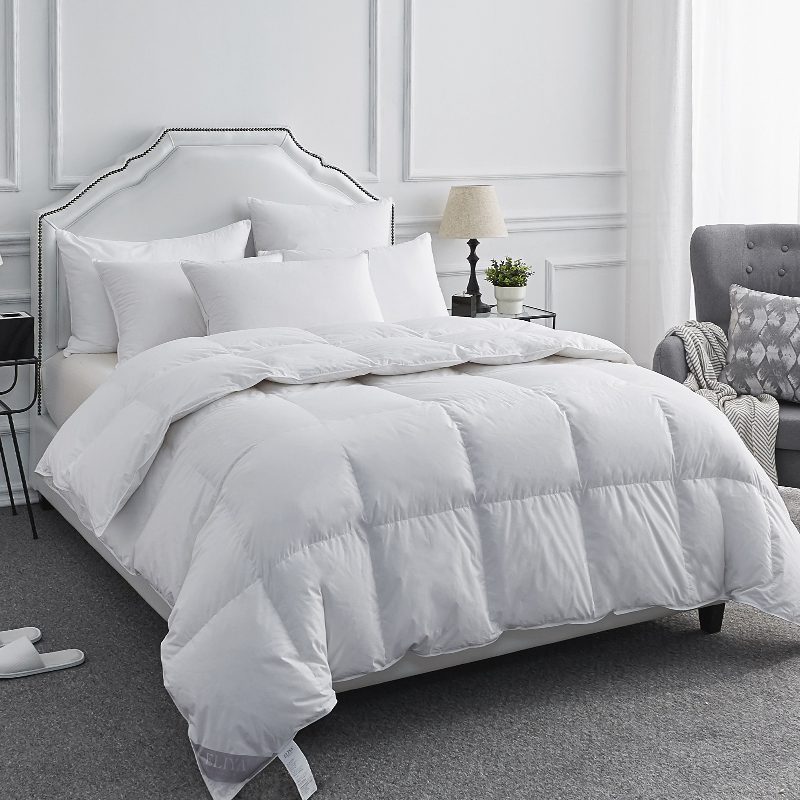
Why a Luxury Down Duvet is Essential for Hotels
Why a Luxury Down Duvet is Essential for Hotels Creating a memorable guest experience starts…

The Strategy of Success: Choosing the Right Hotel Amenities
The Strategy of Success: Choosing the Right Hotel Amenities The bathroom vanity is the first…

Elevate Guest Comfort with Premium Hotel Linen Supply
https://galaxyhotelsupplies.com/wp-content/uploads/2025/09/5月7-2.mp4 Linens are one of the most important elements in shaping the guest experience. Choosing…
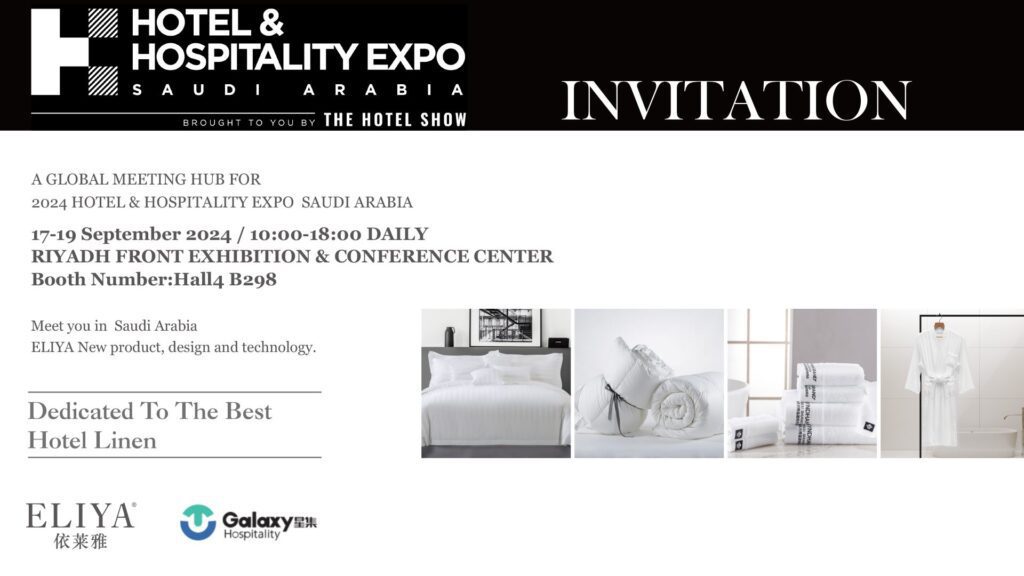
SAUDI ARABIA THE HOTEL SHOW INVITATION
Guangdong Eliya (Galaxy Hotel Supplies) Will Participate Hotel & Hospitality Expo

Beyond the Numbers: Mastering Thread Count for 5-Star Comfort
A comprehensive guide to understanding thread count, cotton quality, and weave styles for durable and…

The Silent Detail: How to Choose the Perfect Hotel Hangers for Your Wardrobe
The Silent Detail: How to Choose the Perfect Hotel Hangers for Your Wardrobe When a…