
How to Build a Hotel Linen Specification Sheet: A Step-by-Step Guide
Published by Galaxy Hotel Supplies | For Hotel Procurement Managers
A linen specification sheet is the single most important document in hotel linen procurement. It is the binding reference that defines exactly what you are buying, protects you when a supplier delivers something different from what was agreed, and ensures consistency across every reorder cycle — regardless of which supplier representative you are dealing with or how much time has passed since your original order.
Yet most hotels do not have one. Or they have something that resembles one — a brief email exchange, a sales catalogue page with a few notes, or a purchase order with minimal product description. When disputes arise, when quality drops between orders, or when a new procurement manager joins and needs to understand what the property uses and why, the absence of a proper specification sheet creates problems that are entirely avoidable.
This guide walks hotel procurement managers through building a complete linen specification sheet for every product category — step by step, with the technical detail that makes a specification sheet a genuinely useful procurement tool rather than a formality.
1. What a Linen Specification Sheet Is — and What It Is Not
A linen specification sheet (sometimes called a product specification document or PSS) is a formal written record of the exact technical requirements for a linen product. It is attached to every purchase order for that product and serves as the reference standard for quality inspection, supplier accountability, and reorder consistency.
A specification sheet is:
- A technical document defining fiber content, construction, dimensions, weight, and finishing requirements
- A quality benchmark against which received goods are inspected
- A reorder reference that ensures consistency across multiple procurement cycles
- A supplier accountability tool — if goods do not match the specification, the specification is the basis for a claim
A specification sheet is not:
- A marketing description or a supplier’s product catalogue page
- A verbal agreement or email summary
- A purchase order alone (though the specification should be attached to every PO)
- A one-time document — it should be updated whenever specifications change
2. Why Every Hotel Needs One for Every Linen Product
Consistency across reorder cycles. Without a specification sheet, reorders are placed against a product name or SKU — and suppliers may substitute materials, change construction, or adjust dimensions without notification. A specification sheet makes any variance detectable and actionable.
Quality inspection basis. When goods arrive, how do you know if they meet your standard? A specification sheet gives your receiving team objective criteria to inspect against — not just a general impression of whether something “looks right.”
Supplier accountability. If a supplier delivers 350 GSM towels when you ordered 450 GSM, your recourse depends on being able to prove what you ordered. A signed specification sheet attached to the PO is that proof.
New staff onboarding. Procurement managers change. When a new manager joins, a complete set of specification sheets gives them an immediate understanding of what the property uses, why specific products were chosen, and what to reorder — without relying on institutional memory.
Multi-property consistency. For hotel groups, specification sheets ensure that all properties in the portfolio use the same product standards — critical for brand consistency and group procurement leverage.
3. The Core Elements of a Linen Specification Sheet
Every linen specification sheet — regardless of product category — should contain the following core elements:
Section 1: Document Header
| Field | Content |
|---|---|
| Property name | Full legal name of the hotel or group |
| Document reference | Unique specification number (e.g., SPEC-LINEN-2026-001) |
| Product category | Bedding / Towels / Table Linen / Uniforms / etc. |
| Product name | Specific product (e.g., King Bed Sheet, Bath Towel) |
| Issue date | Date specification was created or last revised |
| Version number | Version 1.0, 1.1, 2.0, etc. — increment with each revision |
| Approved by | Name and title of the approving procurement manager |
| Supplier name | Name of the approved supplier for this specification |
| Supplier SKU / reference | Supplier’s internal product code for this item |
Section 2: Product Identification
| Field | Content |
|---|---|
| Product type | Flat sheet / fitted sheet / pillowcase / bath towel / etc. |
| Intended use | Guest room / F&B / banquet / pool / spa / etc. |
| Property tier | Economy / Midscale / Upscale / Luxury / Ultra-luxury |
| Brand or label | Supplier brand / own label / unbranded |
Section 3: Material Specification
| Field | Content |
|---|---|
| Fiber content | e.g., 100% Egyptian cotton; 60% cotton / 40% polyester |
| Fiber certification | e.g., Cotton Egypt Association certified; Better Cotton; GOTS organic |
| Yarn type | Ring-spun / open-end spun / combed / carded |
| Weave type | Percale / sateen / terry / waffle / damask / etc. |
| Thread count (TC) | Specify single-ply TC; note if multi-ply and actual single-ply equivalent |
| GSM (grams per sq metre) | Target GSM ± tolerance (e.g., 450 GSM ± 5%) |
Section 4: Construction Specification
| Field | Content |
|---|---|
| Finished dimensions | Length × width in centimetres; specify post-wash dimensions |
| Dimensional tolerance | Acceptable variance (e.g., ±1.5cm on all dimensions) |
| Shrinkage allowance | Maximum acceptable shrinkage after first wash (e.g., ≤3%) |
| Hem type | Single / double / mitered corner / overlocked |
| Hem width | Measurement in centimetres |
| Stitch density | Stitches per inch (e.g., 10–12 SPI) |
| Seam type | Single / double / flat-felled / French seam |
| Special construction | Gusset / border / dobby / cam border / piped edge / etc. |
| Corner construction | Mitered / bartacked / rounded / square |
Section 5: Colour and Finish Specification
| Field | Content |
|---|---|
| Colour | White / optical white / natural white / colour name + Pantone reference |
| Optical brightening agents (OBAs) | Permitted / not permitted / maximum concentration |
| Finish treatment | Wrinkle resistant / stain release / anti-microbial / none |
| Finish durability | Number of wash cycles finish must remain effective |
| Surface texture | Smooth / brushed / ribbed / loop height (for terry) |
Section 6: Performance Standards
| Test | Standard | Minimum Requirement |
|---|---|---|
| Colorfastness to washing | AATCC 61 / ISO 105-C06 | Grade 4 minimum |
| Colorfastness to light | AATCC 16 / ISO 105-B02 | Grade 4 minimum |
| Colorfastness to rubbing (dry) | AATCC 8 / ISO 105-X12 | Grade 4 minimum |
| Colorfastness to rubbing (wet) | AATCC 8 / ISO 105-X12 | Grade 3 minimum |
| Dimensional stability (shrinkage) | AATCC 135 / ISO 6330 | ≤3% warp and weft |
| Pilling resistance | ASTM D3512 / ISO 12945 | Grade 3 minimum after 50 cycles |
| Tensile strength | ASTM D5034 / ISO 13934 | Per category (confirm with supplier) |
| Tear strength | ASTM D1424 / ISO 13937 | Per category (confirm with supplier) |
| Absorbency (towels only) | AATCC 79 | Water absorption within 10 seconds |
Note: Specify that all performance test results must be provided from accredited third-party laboratories — not supplier self-certification. Test reports must reference the specific product being specified.
Section 7: Certifications Required
| Certification | Required / Preferred / Not Required |
|---|---|
| OEKO-TEX® Standard 100 | Required |
| ISO 9001 (manufacturer) | Required |
| GOTS | Required / Preferred / N/A |
| Bluesign® | Preferred |
| Responsible Down Standard | Required for down products |
| NOMITE® | Required for down products |
| Cotton Egypt Association | Required if Egyptian cotton claimed |
| Fair Trade | Preferred |
Section 8: Labelling and Packaging
| Field | Content |
|---|---|
| Care label | Required / not required (cut-label) |
| Care label placement | Position and attachment method |
| Care symbols | ISO 3758 wash care symbols required |
| Size label | Required on all items / by category |
| Brand label | Supplier brand / own label / unbranded |
| Individual packaging | Polybag / paper wrap / unpackaged |
| Case pack quantity | Units per carton |
| Carton marking | Required fields (item description, quantity, PO number, origin) |
Section 9: Quality Inspection Standard
| Field | Content |
|---|---|
| Inspection level | AQL 2.5 major defects / AQL 4.0 minor defects |
| Inspection timing | Pre-shipment (before goods leave factory) |
| Inspection party | Supplier QC / buyer’s QC team / third-party inspector |
| Defect classification | Define major, minor, and critical defects for this product |
| Rejection criteria | Conditions under which a shipment will be rejected |
Major defect examples for linen: Incorrect dimensions outside tolerance, fiber content not matching specification, GSM below minimum, missing certification, colorfastness failure, visible weave defects.
Minor defect examples: Slight variation in shade within acceptable Pantone range, minor stitching irregularity not affecting durability, labelling placement slightly off-centre.
Section 10: Supplier Commitments
| Field | Content |
|---|---|
| Approved sample reference | Reference number of the approved pre-production sample |
| Sample approval date | Date the sample was approved |
| Bulk production match | Supplier commitment that bulk production will match approved sample |
| Specification change notification | Supplier must notify buyer minimum [X] days before any specification change |
| Reorder consistency | Supplier commits to maintaining specification across all reorder cycles |
| Substitution prohibition | No material, fiber, or construction substitution without written buyer approval |
4. Product-Specific Specification Fields
Beyond the core elements above, certain product categories require additional specification fields:
Bedding (Sheets, Duvet Covers, Pillowcases)
| Additional Field | Content |
|---|---|
| Bed size compatibility | Single / Double / Queen / King / Super King |
| Fitted sheet depth | Pocket depth in cm (for fitted sheets) |
| Elastication | Full elastic / corner elastic / elasticated band |
| Closure type (duvet cover) | Button / zip / envelope / tie |
| Corner ties (duvet cover) | Present / not present; position |
| Pillow opening | Side opening / end opening; overlap depth |
Towels
| Additional Field | Content |
|---|---|
| Terry type | Single-sided / double-sided |
| Loop height | Millimetres (longer = softer; shorter = more durable) |
| Loop density | Loops per cm² |
| Border type | Dobby / cam / plain / velour stripe |
| Border width | Centimetres |
| Twisted yarn ratio | Percentage of twisted vs. loop yarn |
Table Linen
| Additional Field | Content |
|---|---|
| Table dimensions | Exact table size the cloth is specified for |
| Drop length | Centimetres on each side |
| Post-wash dimensions | Confirmed post-laundering dimensions |
| Pattern repeat (if applicable) | Centimetres |
| Pantone reference (coloured) | Exact Pantone code |
| Stain release treatment | Required / preferred / not required |
Pillows and Duvets
| Additional Field | Content |
|---|---|
| Fill type | Down / down alternative / hollow fiber / memory foam |
| Fill weight | Grams |
| Fill power (down only) | Cubic inches per ounce |
| Tog rating (duvets) | Tog value |
| Shell thread count | TC of outer shell fabric |
| Shell weave | Percale / sateen / downproof |
| Stitch pattern | Box stitch / baffle box / channel stitch |
| Chamber count | Number of chambers (for box stitch) |
| Corner construction | Ties / loops / plain |
Uniforms
| Additional Field | Content |
|---|---|
| Department | Front office / F&B / kitchen / housekeeping / spa / security |
| Garment type | Jacket / trousers / dress / apron / etc. |
| Size range | XS / S / M / L / XL / XXL / 3XL |
| Cut | Men’s / women’s / unisex |
| Closure type | Button / zip / hook-and-bar |
| Pocket specification | Number / type / dimensions / reinforcement |
| Logo placement | Position / dimensions / application method |
| Logo colour | Pantone thread reference (embroidery) |
| FR treatment (if applicable) | Standard and wash cycle durability |
5. Building Your Specification Sheet: Step-by-Step
Step 1: Audit Your Current Linen Inventory
Before writing a single specification, conduct a full audit of what you currently use. For each product:
- Collect a sample
- Weigh it (GSM verification)
- Measure it (dimensions)
- Check the care label for fiber content
- Photograph it for reference
This audit establishes your baseline — and often reveals that what you think you are using is not what your specification should say.
Step 2: Define Your Standard for Each Product
Based on your property tier, guest expectations, and operational requirements, define the standard you want to achieve for each linen product. Use the benchmarks in this guide and in the relevant category-specific guides in this series to set realistic, appropriate targets.
Step 3: Get Test Data from Your Current or Proposed Supplier
Request third-party test reports for GSM, shrinkage, colorfastness, and tensile strength for the products you intend to specify. Use this data to populate the performance standards section of your specification sheet — and to verify that the product actually meets the standard you are setting.
Step 4: Write the Specification
Complete every section of the specification sheet using the framework above. Be specific and numerical wherever possible — “good quality” is not a specification; “450 GSM ± 5%, 100% ring-spun combed cotton, AATCC 61 colorfastness Grade 4 minimum” is.
Step 5: Get a Pre-Production Sample Made to Specification
Before placing a bulk order, require your supplier to produce a pre-production sample that exactly matches your specification. Verify the sample against every field in the specification sheet. Only approve the sample — in writing — when it fully complies.
Step 6: Attach the Specification to Every Purchase Order
The specification sheet should be referenced on the face of every purchase order (“Goods to be supplied in accordance with Specification Ref: SPEC-LINEN-2026-001, approved sample reference [X]”) and attached as a document. This creates a clear contractual basis for quality inspection and dispute resolution.
Step 7: Inspect Against the Specification on Receipt
When goods arrive, inspect them against the specification — not just against general impression. Weigh samples to verify GSM. Measure dimensions. Check fiber content against the label. Confirm certifications are present. Any variance outside tolerance should be formally documented and raised with the supplier immediately.
Step 8: Review and Update Annually
Specifications should be reviewed at least annually — and updated whenever products change, suppliers change, or operational requirements evolve. Increment the version number with every revision and document what changed and why.
6. Common Mistakes to Avoid
Specifying thread count without specifying ply. Thread count without ply information is meaningless — a multi-ply 600 TC fabric may be inferior to a single-ply 300 TC fabric. Always specify single-ply TC.
Accepting GSM on faith. GSM is one of the most frequently misrepresented specifications in linen procurement. Always weigh samples on a calibrated scale — a postal scale is sufficient for verification.
Omitting dimensional tolerance. Specifying dimensions without a tolerance range leaves you with no recourse if goods arrive slightly short. Always include a tolerance (typically ±1–2cm for linen).
Failing to specify post-wash dimensions. All linen shrinks in the first wash. Specify that dimensions are post-first-wash — not pre-wash — to ensure goods fit as expected after laundering.
Not requiring third-party test reports. Supplier self-certification is not a substitute for independent laboratory testing. Always require accredited third-party test reports for performance specifications.
Forgetting to update specifications after supplier changes. When you change suppliers, the new supplier’s product may differ from the previous one in ways that require specification revision. Always build a new specification review into every supplier transition.
7. Specification Sheet Template Summary
A complete linen specification sheet for a standard product covers:
- Document header (property, reference, version, approval)
- Product identification (type, use, tier, label)
- Material specification (fiber, yarn, weave, TC, GSM)
- Construction specification (dimensions, tolerance, hem, stitch, seam)
- Colour and finish (colour reference, OBA policy, treatments)
- Performance standards (test methods and minimum grades)
- Certifications required (by category)
- Labelling and packaging (care label, size label, carton marking)
- Quality inspection standard (AQL level, timing, defect classification)
- Supplier commitments (sample reference, change notification, substitution prohibition)
- Product-specific fields (by category: bedding, towels, table linen, etc.)
Summary
A well-built linen specification sheet is one of the highest-return documents a procurement manager can invest time in creating. It protects against quality drift, supplier substitution, and reorder inconsistency. It provides the objective basis for quality inspection and dispute resolution. And it preserves institutional knowledge across procurement manager transitions and supplier changes.
The investment in building a complete specification sheet for every linen product is typically a few hours per product — and pays dividends across every subsequent procurement cycle for the life of that product in your operation.
Start with your highest-volume, highest-visibility products — guest room bath towels and bed sheets — and build your specification library from there. Within a single procurement cycle, you will have the documentation foundation for a more consistent, accountable, and cost-effective linen programme.
Galaxy Hotel Supplies works with hotel procurement managers to develop detailed product specifications for every linen category — and manufactures to specification for properties worldwide. Contact our team to discuss your specification requirements or request a sample programme.
- #HotelProducts
- #HospitalityTrends
- #HotelBranding
- #B2BHospitality
- #LuxuryHotelBedding
- #CommercialTextiles
- #LuxuryHotels
- #HotelDesign
- #HotelStyle
- #LuxuryTowels
- #HotelRoomDesign
- #HotelManagement
- #PremiumLinens
- #ShowroomTour
- Eliya
- #HotelDecor
- Galaxy
- #GuestSatisfaction
- #HospitalityLinen
- #HospitalityExpo
- #HotelComfort
- #LuxuryHotelSupplies
- #LuxuryLinens
- #HotelIndustry
- #LuxuryHotel
- #HotelAmenities
- #TradeShow
- #HospitalityTextiles
- #HotelTowels
- #HospitalityDesign
- #LuxuryBedding
- #HotelBedding
- #HotelLinens
- #HotelOperations
- #GALAXYHotelSupplies
- #HotelLinen
- #LuxuryHospitality
- #GuestComfort
- #GuestExperience
- #HotelTextiles
- #HotelProcurement
- #HospitalityIndustry
- #HospitalitySupplies
- #HotelSupplies
- #GALAXYHospitality
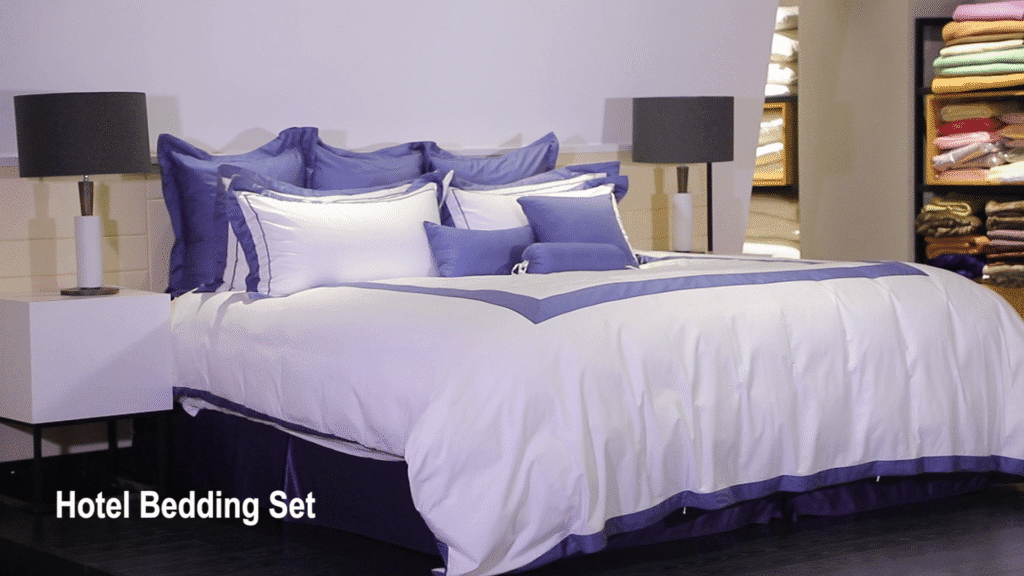
Luxury Hotel Bedding Set for a Five-Star Guest Experience
Luxury Hotel Bedding Set for a Five-Star Guest Experience When it comes to creating a…

The Ultimate Guide to Custom Embroidered Hotel Towels: Branding & Quality
The Ultimate Guide to Custom Embroidered Hotel Towels: Branding & Quality In the competitive world…

High-Quality Hotel Towels for Every Guest Need
https://galaxyhotelsupplies.com/wp-content/uploads/2025/11/313041142327.mp4 GALAXY offers a wide selection of premium hotel towels designed to meet the diverse…
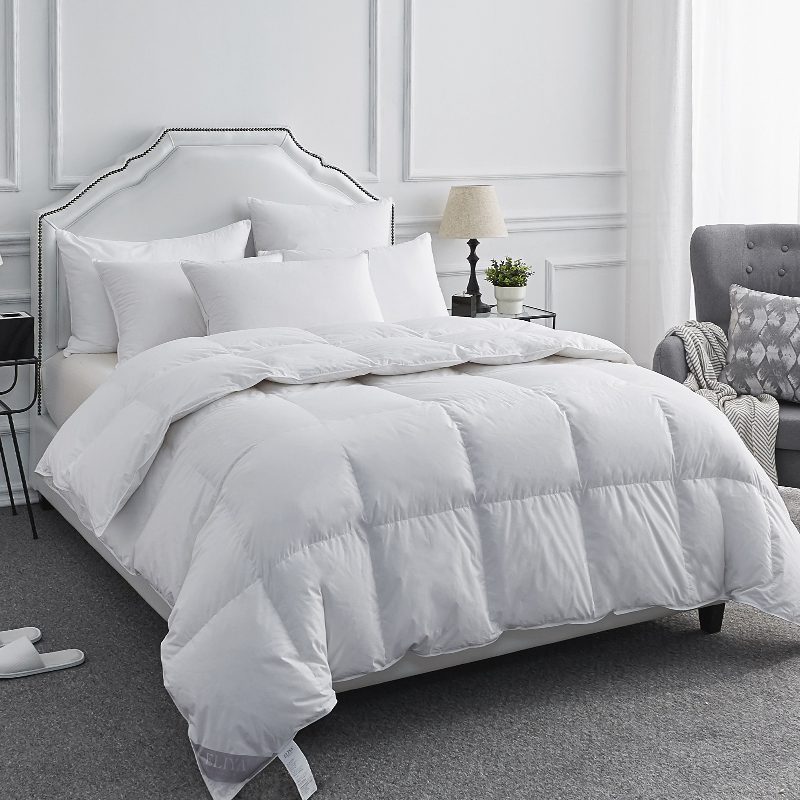
Why a Luxury Down Duvet is Essential for Hotels
Why a Luxury Down Duvet is Essential for Hotels Creating a memorable guest experience starts…

Geometric Sophistication: Sourcing Embroidered Hotel Linens
Geometric Sophistication: Sourcing Embroidered Hotel Linens The bed is the heart of the hotel room,…

The Art of the Event: Transformative Textiles for Professional Banquets
The Art of the Event: Transformative Textiles for Professional Banquets In the world of event…