
 Sourcing Hotel Supplies from China: How to Find a Reliable Manufacturer
 Sourcing Hotel Supplies from China: How to Find a Reliable Manufacturer
Published by Galaxy Hotel Supplies | For Hotel Procurement Managers
China remains the world’s largest manufacturer of hotel textiles and supplies — producing the majority of the world’s hotel linen, towels, bathrobes, uniforms, and amenity products. For hotel procurement managers sourcing internationally, understanding how to navigate the Chinese manufacturing landscape is not optional knowledge — it is a core procurement competency.
The challenge is not finding Chinese manufacturers. A basic internet search returns thousands of results. The challenge is identifying which of those manufacturers are genuine, capable, quality-committed factories — and which are trading companies, brokers, or low-quality operations presenting themselves as something they are not.
This guide gives hotel procurement managers a practical framework for sourcing hotel supplies from China: where to find manufacturers, how to verify their credentials, what due diligence to conduct, and how to structure the relationship for consistent quality and supply reliability.
1. Why China Remains the Leading Source for Hotel Supplies
Despite the growth of alternative manufacturing regions, China continues to dominate global hotel textile and supply production for well-documented reasons:
Manufacturing scale and capability. China’s textile manufacturing infrastructure — particularly in provinces such as Jiangsu, Zhejiang, Shandong, and Guangdong — represents decades of investment in spinning, weaving, dyeing, finishing, and cut-and-sew capability that no other market can fully replicate at equivalent scale.
Vertical integration. Many Chinese hotel textile manufacturers operate vertically integrated supply chains — controlling fiber sourcing, yarn spinning, fabric weaving, dyeing and finishing, and garment production within a single facility or closely linked group of facilities. This integration delivers cost efficiency, quality control, and specification flexibility that fragmented supply chains cannot match.
Certification infrastructure. China’s major hotel textile manufacturers have invested heavily in international certification — OEKO-TEX®, ISO 9001, GOTS, Bluesign® — in response to demand from global hotel brands. The certification infrastructure in China’s major textile manufacturing regions is well-developed.
Price competitiveness. At equivalent quality levels, Chinese manufacturers typically offer pricing that remains competitive with most alternative sourcing regions — particularly for mid-market and upscale hotel specifications.
OEM capability. Chinese manufacturers have extensive experience producing to buyer specifications — custom sizes, custom colours, custom branding, and custom fiber blends are standard capabilities at quality factories.
2. The Manufacturer vs. Trading Company Problem
The single most important due diligence step when sourcing from China is verifying whether you are dealing with a manufacturer or a trading company.
What Is a Trading Company?
A trading company sources products from third-party factories and resells them to buyers, adding a margin without adding manufacturing value. Trading companies are prevalent in Chinese export markets and frequently present themselves as manufacturers — using factory photos, manufacturing language, and production claims that are misleading or false.
Why It Matters
Quality control: A trading company has limited visibility into and control over the manufacturing process. Quality issues are harder to resolve because the trading company must escalate to the factory — adding time and accountability gaps.
Pricing: You are paying the trading company’s margin on top of the factory’s price. For equivalent quality, a factory-direct relationship is typically 15–25% cheaper.
Specification consistency: A trading company may source from different factories across different orders — delivering specification variation that a single factory relationship would not produce.
Accountability: When quality problems arise, a trading company has less accountability and less leverage over the factory than you would have in a direct relationship.
How to Identify a Trading Company
Ask directly: “Do you own and operate your own manufacturing facility?” Follow up with: “Can you provide your factory registration certificate and the factory address?”
Check the business license: A manufacturer’s business license (营业执照) will list manufacturing as the registered business scope. A trading company’s will list trade or sales.
Verify the address: Cross-reference the company address with the factory address. Trading companies are often registered in commercial office buildings, not manufacturing zones.
Alibaba and trade platform indicators: On Alibaba, verified manufacturers carry a “Manufacturer” badge; trading companies carry a “Trading Company” badge. However, these self-declared badges are not independently verified — use them as a starting point, not a conclusion.
Factory audit: The definitive verification. A third-party factory audit conducted by Bureau Veritas, SGS, Intertek, or a specialist hospitality audit firm confirms whether the facility is a genuine manufacturing operation.
3. Where to Find Chinese Hotel Supply Manufacturers
Trade Platforms
Alibaba (alibaba.com): The largest B2B marketplace for Chinese manufacturers. Useful for initial identification and shortlisting, but requires rigorous verification — quality and legitimacy vary enormously across listed suppliers.
Made-in-China (made-in-china.com): Similar to Alibaba; useful for initial identification of suppliers in specific categories.
Global Sources (globalsources.com): More selective than Alibaba; suppliers undergo a more rigorous listing process. Useful for initial shortlisting.
DHgate: More suitable for smaller orders; less relevant for hotel procurement at volume.
Important: Trade platforms are identification tools, not verification tools. Every supplier identified through a trade platform requires independent verification before business is conducted.
Trade Fairs
China’s major trade fairs are the most efficient way to meet, assess, and shortlist manufacturers face-to-face:
Canton Fair (China Import and Export Fair), Guangzhou: The world’s largest trade fair, held twice annually (April and October). The textiles and home products sections include hundreds of hotel textile manufacturers. Meeting suppliers in person allows direct quality assessment and relationship building that no online platform can replicate.
Intertextile Shanghai Apparel Fabrics: Major textile fabric and yarn trade fair; more relevant for procurement managers involved in fabric specification than finished product sourcing.
Heimtextil China: The Chinese edition of the international home textile trade fair; focused on home and hospitality textiles.
Attending trade fairs: Budget at least three days for a trade fair visit. Prepare a supplier evaluation checklist in advance, bring clear product specifications and quality samples, and plan structured meetings with pre-identified priority exhibitors rather than walking the floor.
Industry Associations and Referrals
China National Textile and Apparel Council (CNTAC): The industry body for Chinese textile manufacturers; its member directory includes vetted manufacturers.
Referrals from hotel groups: Other procurement managers — particularly those at non-competing hotel groups — are often willing to share supplier recommendations. Industry networks, hospitality procurement associations, and LinkedIn are useful channels.
Your existing suppliers: Quality Chinese manufacturers often have peer relationships with other quality manufacturers in adjacent categories. If you have a trusted towel supplier, ask for a recommendation for a bedding manufacturer.
4. Key Manufacturing Regions for Hotel Supplies
Understanding China’s textile manufacturing geography allows procurement managers to target their sourcing efforts efficiently.
Jiangsu Province (Nantong, Suzhou, Yangzhou)
Specialty: Home textiles, bedding, hotel linen Nantong is China’s most important centre for hotel textile manufacturing — particularly bedding, duvet covers, and bed linen. Many of China’s leading hotel linen manufacturers are based here. The region has a long history of cotton textile production and a high concentration of export-focused, certified manufacturers.
Zhejiang Province (Hangzhou, Shaoxing, Ningbo)
Specialty: Fabrics, yarns, apparel textiles, some hotel linen Shaoxing is one of China’s largest textile trading and manufacturing centres. Strong in fabric production and dyeing and finishing. Manufacturers here often supply fabric to downstream hotel linen producers.
Shandong Province (Qingdao, Weifang)
Specialty: Cotton textiles, towels, some hotel linen Strong cotton textile manufacturing base. Qingdao is an important export port with well-developed logistics infrastructure.
Guangdong Province (Guangzhou, Dongguan, Shantou)
Specialty: Amenity products, uniforms, slippers, robes, garment manufacturing Guangdong is the centre of China’s garment and amenity manufacturing industry. Hotel uniforms, slippers, bathrobes, and guest amenity kits are predominantly sourced from this region.
Fujian Province (Quanzhou, Xiamen)
Specialty: Sportswear fabrics, some hotel textiles, amenity products Growing manufacturing base with strong export infrastructure through Xiamen port.
5. Due Diligence Checklist for Chinese Manufacturers
Document Verification
- [ ] Business license : Confirm manufacturing is listed as registered business scope; verify company name, registration number, and registered address
- [ ] Export license: Confirms the company is authorised to conduct export trade
- [ ] Factory registration certificate: Confirms the factory is a registered manufacturing entity
- [ ] Tax registration certificate: Standard business compliance document
- [ ] Certifications: OEKO-TEX®, ISO 9001, GOTS, or other relevant certifications — verify independently through the issuing body’s online database using the certificate number
Operational Verification
- [ ] Factory address verification: Cross-reference factory address with satellite imagery (Google Maps or Baidu Maps); a factory of claimed scale should be visible as a manufacturing facility, not an office building
- [ ] Production capacity claim verification: Cross-reference stated monthly production capacity with factory size and equipment count during a factory visit or audit
- [ ] Quality control documentation: Request QC process documentation, including in-process inspection records and pre-shipment inspection reports from recent production runs
- [ ] Export history: Request references from existing export customers — particularly hotel clients in your region
Factory Audit
For any supplier intended to supply critical linen categories, a factory audit is strongly recommended before placing a significant first order.
Audit scope should cover:
- Factory ownership and management structure
- Production capacity and current utilisation
- Quality control systems and equipment
- Worker welfare and social compliance (no child labour, safe working conditions, fair wages)
- Environmental compliance (wastewater treatment, chemical management)
- Certifications verification (on-site confirmation of certification scope)
Audit providers: Bureau Veritas, SGS, Intertek, QIMA, and specialist hospitality audit firms all conduct factory audits in China. Cost typically ranges from $400–$800 per audit depending on scope and location.
6. Communication and Language Considerations
Effective communication with Chinese manufacturers is a practical procurement challenge that many buyers underestimate.
Written Communication
- Use written English for all specification and commercial communication — verbal agreements with Chinese manufacturers frequently result in misunderstandings
- Keep language simple and precise: avoid idioms, colloquialisms, and ambiguous phrasing
- Confirm every verbal or WeChat discussion in a follow-up email summary
- Use numbered lists and clear section headings in written specifications — these translate more clearly than flowing prose
Key Platforms
WeChat: The dominant business communication platform in China. Most Chinese manufacturers communicate primarily through WeChat — have the app installed and use it for routine communication.
Email: Still used for formal documentation and contracts. Response times may be slower than WeChat.
Translation: For important documents (contracts, specification sheets), consider professional translation into Chinese (Simplified) — this reduces the risk of misinterpretation of critical terms.
Working with Sourcing Agents
For procurement managers who source from China regularly but lack Mandarin language capability or in-market presence, a sourcing agent — a China-based professional who represents the buyer’s interests — can add significant value:
What a good sourcing agent provides:
- Mandarin language communication with manufacturers
- Local market knowledge and supplier network
- On-the-ground factory visits and quality inspections
- Cultural bridging in negotiation and dispute resolution
- Logistics and customs coordination
What to look for in a sourcing agent:
- Established track record in hotel textiles specifically (not just general merchandise)
- No financial interest in specific factories — agent fees should be paid by the buyer, not the factory
- Transparent reporting of factory visits and quality inspections
- References from hotel clients of comparable size and tier
7. Pricing and Payment Terms with Chinese Manufacturers
Understanding Chinese Pricing Structure
Chinese manufacturer pricing is typically quoted in USD (occasionally EUR) and structured around:
FOB (Free on Board): The most common Incoterm for Chinese hotel textile exports. The manufacturer is responsible for delivering goods to the named port of export (typically Shanghai, Ningbo, Guangzhou, or Qingdao); the buyer arranges and pays for international freight from that point.
CIF (Cost, Insurance, Freight): The manufacturer arranges and pays for freight and insurance to the destination port. Convenient but gives the buyer less control over logistics.
EXW (Ex Works): Buyer takes responsibility for all logistics from the factory gate. Rarely appropriate for international hotel procurement.
For most hotel procurement: FOB is the recommended Incoterm — it gives the buyer control over international freight while assigning responsibility for domestic Chinese logistics to the supplier.
Payment Terms
Standard payment terms for Chinese manufacturers are typically:
- 30% deposit on order placement; 70% balance before shipment: Most common for first-time buyers and smaller orders
- Letter of Credit (L/C): Standard for large orders with new suppliers; provides payment security for both parties
- 30-day net from B/L date: Available to established accounts with strong payment history
- Open account (60–90 day net): Achievable for significant long-term accounts
Negotiating better terms: As with all supplier negotiations, payment terms are negotiable. Established relationships, consistent payment history, and significant annual volume all support negotiation for more favorable terms. See the vendor negotiation guide in this series for the full negotiation framework.
Currency and Exchange Rate Risk
For significant procurement volumes, currency movements between order placement and payment can materially affect landed cost. Options for managing currency risk:
- Negotiate USD-denominated pricing (removes RMB fluctuation risk)
- Use forward exchange contracts to fix the exchange rate at order placement
- Build a currency contingency (typically 5–8%) into your procurement budget for international supply categories
8. Quality Management Across the Manufacturing Relationship
Pre-Production Sample (PPS)
For all significant orders, require a pre-production sample before bulk production begins. The PPS confirms that the factory can produce to your specification before committing to full production volume.
In-Process Inspection
For large orders with extended production timelines, an in-process inspection at 50% production completion catches quality issues early — while there is still time to correct them without delaying the full shipment.
Pre-Shipment Inspection (PSI)
A pre-shipment inspection — conducted by your own team or a third-party inspection agency — is the final quality gate before goods leave China. This is the most cost-effective point to identify and resolve non-conforming goods; once shipped, resolution requires return logistics or price disputes.
PSI process:
- Inspector attends factory and draws a random sample per AQL standard
- Inspects against the approved specification sheet and approved PPS
- Produces a written inspection report with photographs
- Report is shared with buyer; buyer approves shipment or requests remediation
Cost: A standard pre-shipment inspection costs $250–$500 through providers such as QIMA, SGS, or Bureau Veritas — a small fraction of the cost of receiving a non-conforming shipment.
Building Long-Term Quality Relationships
The most effective quality management strategy with Chinese manufacturers is a long-term relationship built on clear specifications, consistent orders, and professional management of quality issues when they arise.
Chinese manufacturers invest in accounts that:
- Provide clear, detailed specifications that reduce production uncertainty
- Pay on time and consistently
- Communicate quality issues professionally and constructively rather than aggressively
- Provide feedback on what is working well, not just what is wrong
- Commit to long-term relationships rather than switching suppliers for marginal price differences
The accounts that receive the best quality, the most flexible service, and the most proactive communication from Chinese manufacturers are the ones that have built genuine partnership relationships — not the ones that apply the most pressure.
9. Galaxy Hotel Supplies: A Manufacturer You Can Trust
Galaxy Hotel Supplies is a vertically integrated hotel textile manufacturer based in China, with over 20 years of experience supplying premium linen, towels, bedding, uniforms, and amenities to hotel groups across more than 30 countries.
What sets us apart:
- Factory-direct: We own and operate our manufacturing facilities — no trading company intermediaries, no quality accountability gaps
- Full certification: OEKO-TEX® Standard 100, ISO 9001, and additional certifications available on request — all independently verifiable
- OEM capability: Custom fiber, custom colour (Pantone matching), custom sizing, woven logos, embroidery, and bespoke collection development
- Hotel-specialist experience: Our entire product range and production capability is focused on hospitality — we understand hotel specifications, operational requirements, and brand standards
- English-language team: Our export team communicates in fluent English — no language barriers, no miscommunication on critical specifications
- Pre-shipment inspection: We welcome and support pre-shipment inspections by buyer teams or third-party inspectors — because we are confident in our production quality
We have supplied linen programmes for new hotel openings, ongoing replenishment for established properties, and custom OEM collections for luxury brands across Asia, the Middle East, Europe, and the Americas.
Summary
Sourcing hotel supplies from China offers significant advantages in quality, capability, and cost — but only when procurement managers approach it with the due diligence and relationship management discipline that Chinese manufacturing requires.
The key principles are:
- Verify manufacturer vs. trading company status before any commitment
- Conduct factory audits for critical supply relationships
- Use written specifications and document all agreements
- Build pre-production and pre-shipment inspection into every significant order
- Invest in long-term relationships with manufacturers who consistently deliver
Applied consistently, these practices allow hotel procurement managers to access the full quality and cost advantage of Chinese manufacturing — while managing the risks that have given some buyers a less positive experience.
Galaxy Hotel Supplies welcomes factory visits, third-party audits, and direct procurement discussions from hotel buyers worldwide. Contact our team to arrange a factory visit, request certification documentation, or discuss your hotel linen requirements.
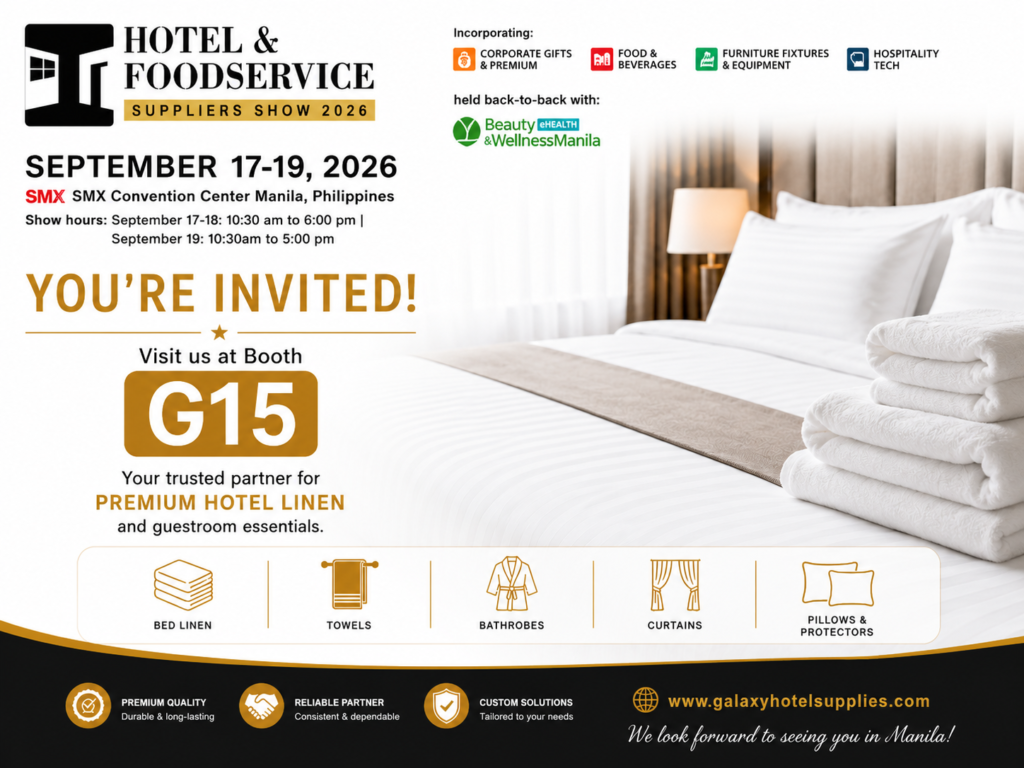
Join Us at the Hotel & Foodservice Suppliers Show 2026 in Manila!
We are exhibiting at the SMX Convention Center Manila this September. Drop by Booth G15…

Successful Day 1 Wrap-Up: ELIYA & Galaxy Group at Hotel & Foodservice Suppliers Show 2026
High-density sateen bed sheets, custom-embroidered pillowcases, plush bath towels, and hotel guestroom accessories presented by…
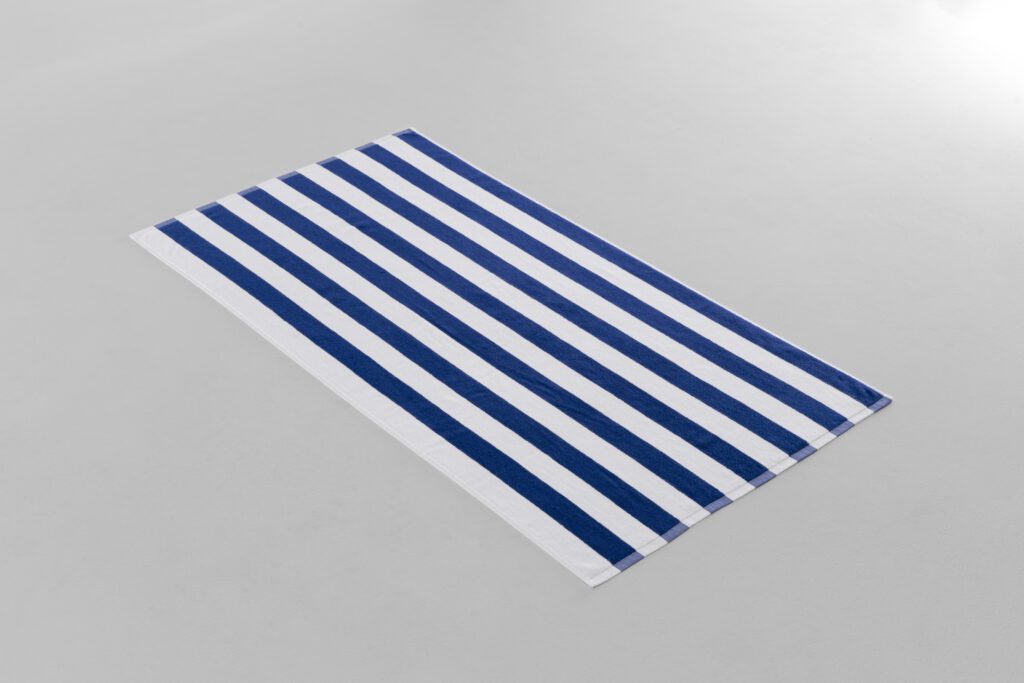
Sun, Chlorine, and Salt: Why Indanthrene Dyed Pool Towels are Essential for Resorts
Sun, Chlorine, and Salt: Why Indanthrene Dyed Pool Towels are Essential for Resorts For a…

The Ultimate Guide to Hotel Linens Wholesale: Quality, Savings & Guest Experience
The Ultimate Guide to Hotel Linens Wholesale: Quality, Savings & Guest Experience In the competitive…
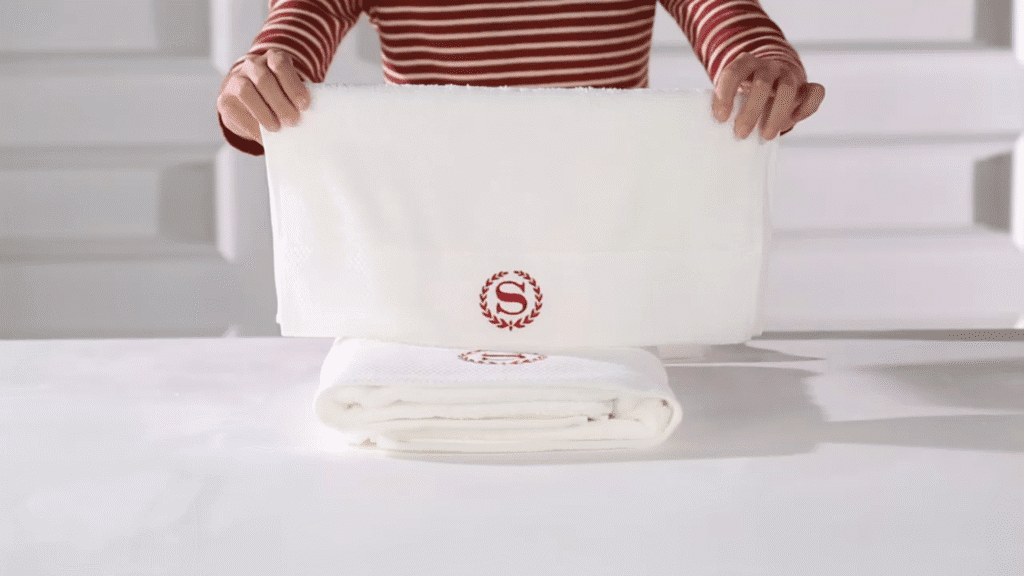
Premium Embroidered Towels for Hotels and Resorts
https://galaxyhotelsupplies.com/wp-content/uploads/2025/09/毛巾三件套刺绣logo语音解说.mp4 In the hospitality industry, details matter—and towels are among the essentials that shape guest…

The Eco-Friendly Turn: Transitioning to Sustainable and Organic Hotel Linens
A guide for hospitality leaders on adopting sustainable textiles, from organic cotton to recycled fibers,…