
Hotel Linen Common Quality Problems: Causes, Analysis & Solutions
Published by Galaxy Hotel Supplies | For Hotel Procurement Managers
Even well-specified linen from reputable suppliers develops quality problems over time. Yellowing, pilling, shrinkage, loss of absorbency, premature tearing, colour fading — these issues are among the most frequently reported in hotel linen management, and among the most misdiagnosed. When linen degrades faster than expected, the instinct is often to blame the supplier. In reality, the cause is frequently a combination of factors: specification, laundering practice, water chemistry, chemical dosing, and storage — any one of which, if addressed, can significantly extend linen lifespan.
This guide gives hotel procurement managers and housekeeping teams a systematic framework for diagnosing and resolving the most common hotel linen quality problems — with root cause analysis, corrective actions, and prevention strategies for each issue.

1. Yellowing of White Linen
Yellowing is the most frequently reported quality complaint in hotel linen operations. White sheets, towels, and table linen that should remain bright white gradually develop a yellow or grey cast that makes them look dirty even when clean — generating guest complaints and forcing premature replacement.
Causes
Optical brightening agent (OBA) depletion: Most white hotel linen contains OBAs — fluorescent compounds that absorb UV light and re-emit it as visible blue-white light, making the fabric appear brighter. OBAs are gradually depleted by chlorine bleach, high wash temperatures, and repeated laundering. Once depleted, the natural yellowish tone of cotton fibers becomes visible.
Chlorine bleach overuse: Chlorine bleach is highly effective at stain removal but degrades cotton fibers and destroys OBAs with repeated use. Hotels that use chlorine bleach routinely — rather than reserving it for heavily stained items — accelerate yellowing significantly.
Insufficient rinsing: Detergent residue left in fabric after washing reacts with minerals in the water and with body oils from subsequent guest use, causing progressive yellowing.
Hard water mineral deposits: Calcium and magnesium in hard water bind to cotton fibers during washing and drying, causing a grey-yellow discolouration that worsens with repeated cycles.
Body oil and perspiration: Prolonged contact with body oils and perspiration — particularly in pillowcases and mattress protectors — causes oxidative yellowing that standard wash cycles may not fully remove.
Incorrect storage: Linen stored in direct sunlight or in poorly ventilated areas discolours through UV exposure and moisture-related oxidation.
Solutions
Switch from chlorine to oxygen bleach for routine whiteness maintenance. Reserve chlorine bleach for heavily stained or infected linen only. Oxygen bleach maintains whiteness without the fiber and OBA degradation caused by chlorine.
Add a whiteness booster to your wash program. Products containing optical brighteners or blue-white dye enhancers can restore whiteness in depleted linen and extend the whiteness lifespan of new linen.
Improve rinsing. Add an additional rinse cycle or extend rinse time. The final rinse should be clear of visible detergent suds before extraction.
Install a water softener. If your property is in a hard water area, a water softening system reduces mineral deposition on linen during washing and significantly improves whiteness retention.
Use a sour (neutraliser) in the final rinse. Citric acid or other acid-based neutralisers lower the fabric pH after washing, preventing alkaline residue from contributing to yellowing.
Review OBA content with your supplier. For new linen orders, confirm OBA concentration with your manufacturer and request laundering guidance that maximises OBA longevity.

2. Pilling
Pilling — the formation of small fiber balls on the fabric surface — is one of the most visible indicators of linen quality degradation. It makes linen look worn and cheap even when it is structurally sound, and is frequently mistaken for poor product quality when the cause is often laundering practice.
Causes
Low-quality yarn: Pilling originates from short, loose fibers on the yarn surface that work free during mechanical action and tangle into balls. Open-end spun yarns pill significantly faster than ring-spun or combed cotton yarns, which have fewer loose fiber ends.
Excessive mechanical action in washing: High-speed drum rotation, overloaded machines, and aggressive wash cycles increase fiber-on-fiber friction — the primary mechanical cause of pilling.
Mixed fabric loads: Washing linen with rough or abrasive items (uniforms with Velcro, kitchen cloths, heavily soiled items) accelerates surface fiber damage.
Over-drying: Tumble drying at excessive heat or for extended periods increases surface fiber damage and accelerates pilling.
Friction in use: Pillowcases pill faster than sheets because of repeated friction against hair and skin. This is normal — but accelerated by low yarn quality.
Solutions
Specify ring-spun or combed cotton yarns in your linen procurement. The additional cost is modest; the pilling resistance improvement is significant. Request yarn specification documentation from your supplier.
Reduce wash load weight. Overloaded drums increase mechanical stress on fabric. Follow manufacturer-recommended drum fill levels — typically 80% of rated capacity.
Separate linen from abrasive items. Never wash linen with items that have rough surfaces, Velcro fastenings, or heavy soil that requires aggressive mechanical action.
Reduce spin speed for delicate items. High extraction speeds increase mechanical stress. For premium bedding and pillow covers, reduce spin speed and accept slightly longer drying times.
Use a fabric conditioner sparingly. A small amount of fabric conditioner reduces inter-fiber friction and can slow pilling development. Do not overuse — see the absorbency loss section below.
Replace pilled linen promptly. Pilled linen that has crossed the visible threshold should be downgraded to back-of-house use — it cannot recover and will generate guest complaints in guest-facing deployment.
3. Shrinkage
Unexpected shrinkage — where linen no longer fits the bed, table, or pillow it was specified for — is a costly and disruptive quality problem that typically appears in the first few wash cycles and may continue gradually thereafter.
Causes
Excess shrinkage in the first wash: All cotton linen shrinks in the first wash — the specification should account for this with pre-shrunk dimensions or documented shrinkage allowance. When shrinkage exceeds the specified tolerance (typically ≤3%), the specification or the product is at fault.
High wash temperature: Cotton fibers contract when exposed to heat above their tolerance. Washing at 85°C causes significantly more shrinkage than washing at 60°C — particularly for loosely woven fabrics.
Over-drying: Heat in the tumble dryer causes additional shrinkage after washing. Over-drying — running linen through a full drying cycle beyond the point of dryness — compounds wash-cycle shrinkage.
Incorrect fabric finishing: Fabrics that have not been properly tension-set during manufacturing are prone to excessive shrinkage when washed. This is a manufacturing quality issue.
Blended fabrics: Cotton-polyester blends have different shrinkage rates for each fiber component. Poorly balanced blends can shrink unevenly, causing distortion as well as dimensional reduction.
Solutions
Verify pre-wash and post-wash dimensions in your specification sheet. All linen dimensions should be specified post-first-wash — confirm with your supplier that the dimensions quoted are post-shrinkage.
Reduce wash temperature for categories experiencing excessive shrinkage. Moving from 85°C to 60°C significantly reduces heat-induced shrinkage without compromising cleaning effectiveness for most soil levels.
Install moisture sensors on tumble dryers and remove linen immediately when dry. Over-drying is a major and often overlooked contributor to shrinkage.
Test before bulk orders. For new supplier relationships, wash a sample 10 times and measure after each cycle. Confirm that shrinkage stabilises within the first 3–5 cycles and stays within specification tolerance.
Raise a quality claim if shrinkage exceeds the tolerance specified in your purchase order. Document measurements with photographs and submit within your agreed claims window.
4. Loss of Towel Absorbency
Towels that feel soft but repel water rather than absorbing it are a common and frustrating quality issue — particularly in properties that launder towels intensively. Guests notice immediately; the wet-surface-beading effect is unmistakable.
Causes
Fabric softener buildup: The most common cause. Fabric softener deposits a thin film on terry loops that initially improves hand feel but progressively coats the loop surface, preventing water absorption. Properties that add softener to every wash cycle accelerate this problem significantly.
Silicone-based finishing agents: Some manufacturers apply silicone-based softening agents to new towels for a premium initial feel. These agents wash out over time — and while washing out, they can temporarily reduce absorbency. This is normal and resolves after several wash cycles.
Detergent residue buildup: Incomplete rinsing allows detergent residue to accumulate on terry loops, reducing absorbency over time.
Hard water mineral deposits: Calcium and magnesium deposits from hard water coat terry loops and reduce their absorbency — similar to the effect of softener buildup.
Over-drying: Excessive heat in the tumble dryer can cause the tips of terry loops to fuse slightly, reducing their effective surface area and absorbency.
Solutions
Reduce softener frequency. Use fabric softener on towels no more than once every 5 wash cycles. Many quality hotel towels do not require softener at all — the natural softness of ring-spun Egyptian cotton does not need chemical enhancement.
Run a strip wash on affected towels: wash without detergent or softener at 60°C with a cup of white vinegar in the rinse cycle. This breaks down softener and mineral deposits and restores absorbency in many cases. Repeat if necessary.
Improve rinsing. Ensure the final rinse cycle is running long enough to remove all detergent residue. Add a rinse cycle if your current protocol is insufficient.
Install a water softener if hard water is a contributing factor. This is the most effective long-term solution for mineral deposit-related absorbency loss.
For new towel orders: Request that the manufacturer does not apply silicone-based softening agents, or confirm that any agents used are water-soluble and will wash out within the first 3–5 cycles.
 5. Colour Fading and Inconsistency
 5. Colour Fading and Inconsistency
For properties using coloured linen — coloured table linen, coloured uniform items, or branded towels with coloured borders — colour fading and batch-to-batch colour inconsistency are significant quality issues.
Causes
Poor dyeing quality: Low-quality reactive or direct dyes have insufficient wash fastness — they begin fading after a small number of wash cycles. This is a manufacturing quality issue.
Chlorine bleach damage: Chlorine bleach degrades most dyes, causing rapid fading of coloured linen. Even trace amounts of chlorine bleach in a wash load can cause irreversible colour damage to coloured items.
High wash temperature: Excessive wash temperature accelerates dye migration from the fiber, particularly for direct and some reactive dyes.
UV exposure: Coloured linen exposed to direct sunlight during drying or storage fades faster than linen dried and stored away from UV.
Batch-to-batch variation: Dye lots from different production runs may vary slightly in shade — visible when items from different batches are used together.
Solutions
Specify colorfastness standards in your purchase order: AATCC 61 (colorfastness to laundering) Grade 4 minimum; AATCC 16 (colorfastness to light) Grade 4 minimum. Request third-party test reports confirming compliance.
Never use chlorine bleach on coloured linen. Label or colour-code your laundry chemicals and laundry sorting areas to prevent accidental bleach application to coloured items.
Wash coloured linen at 40–60°C maximum. Higher temperatures accelerate colour migration. Confirm the correct wash temperature with your supplier for each coloured product.
Separate coloured linen from white linen in all wash loads — colour transfer, even from well-dyed fabrics, can discolour white linen over time.
Order in large batches to minimise dye lot variation. For products where colour consistency is critical, order sufficient quantity from a single production run to cover a full operational cycle. Specify Pantone colour references and require batch colour verification against the approved standard.
6. Premature Tearing and Seam Failure
Linen that tears, frays, or loses seam integrity significantly faster than expected represents a specification or laundering problem that generates both replacement cost and housekeeping operational disruption.
Causes
Low stitch density: Seams with fewer than 8 stitches per inch are structurally weak and will fail under the mechanical stress of industrial laundering — particularly at stress points (corners, crotch seams in garments, towel borders).
Insufficient seam reinforcement: High-stress points — towel corners, pillow opening seams, fitted sheet corner elastics — require bartacking or double-stitching. Without reinforcement, these points fail first.
Mechanical damage in the laundry: Sharp objects left in laundry loads (pins, metal fastenings, broken equipment components) cause tears and cuts. Worn drum seams or damaged equipment can also snag and tear linen.
Over-loading: Overloaded washing machines subject linen to excessive mechanical stress, particularly at seams. The drum cannot rotate freely at full capacity — linen is compressed and stressed rather than gently tumbled.
Thin fabric from excessive washing at high temperature: Repeated high-temperature washing gradually thins cotton fabric, making it structurally weaker and more susceptible to tearing under normal use.
Incorrect drying: Entanglement in the dryer — particularly for items with ties, cords, or elastic — can cause tears during the tumble cycle.
Solutions
Inspect seam quality before accepting delivery. Count stitches per inch at critical seam points; confirm double-stitching and bartacking at stress points. Reject items that do not meet specification.
Implement a sharp object policy in the laundry: all pockets and seams checked before items enter the wash; metal detectors or sorting protocols for items at risk of containing sharp objects.
Reduce wash load weight to manufacturer-recommended levels. Overloading is the most common preventable cause of mechanical damage in hotel laundries.
Conduct regular equipment inspections. Drum seams, door seals, and internal components should be inspected monthly for damage that could snag linen.
Reduce wash temperature for thin or aging linen to reduce further fiber thinning. Items that have thinned significantly should be downgraded or discarded — further washing will only accelerate failure.
7. Rough or Stiff Texture
Towels and bedding that feel rough or stiff — particularly after the first wash — are a common quality complaint that causes immediate guest dissatisfaction.
Causes
Hard water mineral deposits: The most common cause. Calcium and magnesium ions in hard water bind to cotton fibers during washing, creating a stiff, rough surface feel. This problem worsens with each wash cycle in hard water environments without water softening.
Insufficient rinsing: Alkaline detergent residue left in fabric creates stiffness and can cause skin irritation for guests.
Over-drying: Excessive tumble drying removes all residual moisture from cotton fibers, leaving them brittle and rough. Properly dried cotton should retain 8–12% residual moisture for softness.
New linen manufacturing residues: Some new linen — particularly towels — is treated with sizing agents or finishing chemicals during manufacture that create initial stiffness. These wash out after 3–5 cycles.
Incorrect detergent type: Highly alkaline detergents, or detergents not formulated for the local water hardness, can leave residues that cause stiffness.
Solutions
Install a water softener for properties in hard water areas. This is the single most effective solution for chronic stiffness caused by mineral deposits.
Add a sour (acid neutraliser) to the final rinse. Citric acid or formic acid-based neutralisers lower the fabric pH and counteract alkaline residue stiffness.
Add a rinse cycle or extend rinse time to ensure complete detergent removal.
Calibrate drying cycles with moisture sensors — remove linen at 8–12% residual moisture rather than drying to bone-dry.
Pre-wash new linen before guest deployment. New towels and bedding should be washed 2–3 times before first use — this removes manufacturing residues and initiates the softening process.
Use fabric conditioner sparingly (on towels, every 3–5 cycles only) to improve hand feel without causing absorbency loss.

8. Mildew and Odour
Linen that develops a musty, sour, or mildew odour is a hygiene issue as well as a quality issue — and one that will generate immediate guest complaints.
Causes
Storing linen while damp: The most common cause. Linen that is not fully dry before being folded and stored creates the ideal conditions for mould and mildew growth.
Slow laundry turnaround in humid climates: In tropical and subtropical environments, linen left in laundry bags, trolleys, or laundry rooms for extended periods before washing develops bacterial growth and associated odour.
Insufficient wash temperature or chemical concentration: Low wash temperatures combined with dilute detergent may not achieve adequate bacterial kill, allowing odour-causing bacteria to survive in the fabric.
Washing machine contamination: Biofilm buildup in washing machine drums, seals, and detergent compartments can transfer bacteria and odour to linen during washing.
Inadequate ventilation in linen storage: Linen rooms with poor air circulation and high humidity create conditions for mould growth on stored linen.
Solutions
Never store linen until fully dry. Moisture sensors on dryers and a policy of immediate folding and storage after drying prevents the primary cause of mildew.
Increase wash temperature for persistently odorous linen — 75–85°C is required for effective bacterial kill in heavily contaminated items.
Add a hygiene rinse product to your laundry chemical program for linen categories prone to odour — peracetic acid or quaternary ammonium compound-based hygiene products provide effective bacterial kill at lower temperatures.
Clean washing machines monthly — including drum, door seal, and detergent compartments. Run an empty hot wash with a machine cleaner to remove biofilm buildup.
Improve linen room ventilation. Install dehumidifiers or increase air circulation in high-humidity linen storage areas.
Address contaminated linen immediately. Linen with established mildew odour requires a specialist treatment cycle — standard washing will not fully remove the odour. Wash at 75–85°C with a hygiene product; if odour persists after two treatment cycles, discard.
9. Holes and Snags in Fabric
Small holes or snags appearing in sheets and pillowcases — particularly in the centre of the fabric rather than at seams — are a distinctive quality problem with a specific and frequently misidentified cause.
Causes
Chemical damage (most common): Undiluted chlorine bleach or caustic cleaning chemicals coming into direct contact with linen fabric causes immediate localised fiber destruction — resulting in holes that appear at random positions across the fabric. This is the most common cause of holes in hotel linen and is almost always a laundering chemical management issue.
Mechanical damage: Sharp objects in the wash load, damaged drum components, or linen caught in machine mechanisms during the wash or drying cycle.
Insect damage: Moth or other insect damage to stored linen — particularly natural fiber linen stored for extended periods.
Friction holes: Repeated friction at specific points — particularly where linen contacts rough mattress surfaces or bed frame components — can create localised wear through.
Solutions
Review bleach dilution and application. Bleach must always be diluted before contact with linen — never add concentrated bleach directly to a load containing linen. Install automatic dosing systems to eliminate manual bleach application errors.
Inspect all laundry equipment monthly for sharp edges, broken components, or damaged drum seams that could cause mechanical damage.
Inspect linen storage areas for evidence of insect activity. Natural fiber linen stored for extended periods should be stored in sealed bags or containers, or treated with appropriate pest control measures.
Check bed frames and mattress foundations for rough edges or exposed components that could cause friction damage to fitted sheets.
10. Building a Systematic Quality Problem Response
When a quality problem is identified, a structured response process ensures root cause is identified and corrective action is effective:
Step 1 — Document the problem. Photograph affected items; note the category, quantity, approximate age (wash cycles), and location (which rooms or departments). Pattern recognition often reveals the cause.
Step 2 — Identify the pattern. Is the problem appearing across all linen of a specific type, or only certain batches? Does it affect all properties or only one? Is it getting worse over time, or stable? Patterns point toward root cause.
Step 3 — Conduct root cause analysis. Work through the potential causes systematically — specification, laundering temperature, bleach type, water chemistry, drying protocol, storage conditions. Do not assume supplier fault without eliminating operational causes first.
Step 4 — Implement corrective action. Address the identified root cause — adjust laundering protocol, install water softening, retrain staff, or raise a supplier quality claim as appropriate.
Step 5 — Monitor effectiveness. Track the quality issue across the next 4–8 wash cycles after implementing corrective action. If the problem continues, root cause analysis was incomplete — investigate further.
Step 6 — Document outcomes. Record the problem, root cause, corrective action, and outcome. This documentation builds institutional knowledge, prevents recurrence, and provides evidence for supplier discussions or warranty claims.
Summary
The majority of hotel linen quality problems are preventable — and most are caused or exacerbated by laundering practice rather than product quality alone. Yellowing, pilling, shrinkage, absorbency loss, colour fading, seam failure, texture problems, mildew, and holes all have identifiable root causes and practical corrective actions.
Procurement managers who understand these issues — and share this knowledge with their housekeeping and laundry teams — can significantly extend linen lifespan, reduce replacement spend, and maintain the quality standards that their brand and guests expect.
The framework in this guide — systematic root cause analysis, evidence-based corrective action, and preventive protocol management — is the foundation of a linen quality management approach that delivers measurable operational and financial results.
Galaxy Hotel Supplies provides laundering protocol guidance and quality troubleshooting support for all products supplied. Contact our team if you are experiencing quality issues with your hotel linen — we are happy to assist with root cause analysis and corrective action recommendations.
Timeless Luxury: Golden Embroidered Linens for Hotels
Timeless Luxury: Golden Embroidered Linens for Hotels When it comes to creating a memorable hotel…
Luxury Embroidered Jacquard Towels for Hotels
When it comes to creating a memorable guest experience, every detail matters — including the…
INVITATION:A GLOBAL MEETING HUB FOR2025 HOTEL & HOSPITALITY EXPO SAUDL ARABIA
GALAXY at 2025 Hotel & Hospitality Expo: Innovations for Global Hospitality Join GALAXY at the 2025 Hotel…
The Power of Choice: Curating Custom Hotel Amenity Collections
The Power of Choice: Curating Custom Hotel Amenity Collections Welcome to the second installment of…
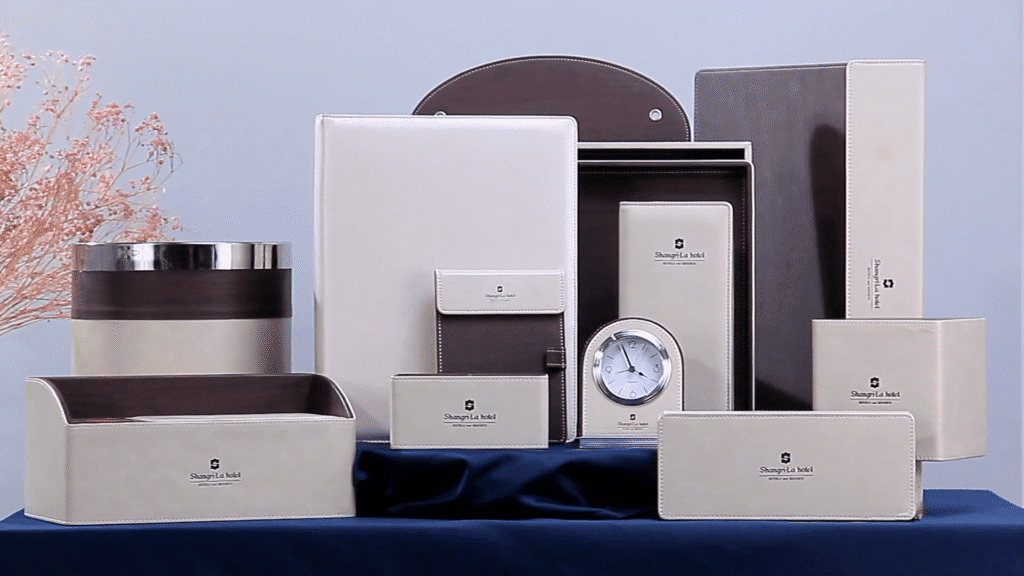
Timeless Sophistication for Premium Hospitality Spaces
In luxury hospitality, it’s often the smallest details that leave the biggest impression. Our leather…

Hotel Industry Trends in 2025: Transformations and Innovations
Hotel Industry Trends in 2025: Transformations and Innovations As we move into 2025, the hotel…