
Hotel Linen & Guest Reviews: How to Use Quality to Build Your Reputation
Published by Galaxy Hotel Supplies | For Hotel Procurement Managers
In an era when 80% of travelers read online reviews before booking, and when a single viral social media post can reach millions of potential guests, linen quality has become one of the most commercially significant procurement decisions a hotel makes. The connection between what guests sleep on and what they write about is direct, measurable, and increasingly well-documented.
This guide examines the relationship between hotel linen quality and guest reviews — with data on what guests notice and comment on, how linen-related review language affects booking decisions, what specific improvements deliver the highest review score return, and how procurement managers can use this insight to make the business case for linen investment.
 1. The Review-Linen Connection: What the Data Shows
What Guests Comment On
Analysis of hotel review platforms consistently shows that bed and bathroom quality are among the top five most frequently mentioned topics in hotel reviews — across all property tiers, markets, and demographics. Within these categories, specific linen-related terms appear with striking frequency:
Positive review language associated with linen:
- “Incredibly comfortable bed”
- “Softest sheets I’ve ever slept on”
- “Towels were thick and luxurious”
- “Pillows were perfect”
- “Bed felt like sleeping on a cloud”
- “Beautifully dressed bed”
- “Spotlessly clean linen”
Negative review language associated with linen:
- “Sheets felt rough and scratchy”
- “Towels were thin and barely absorbent”
- “Pillows were flat and lumpy”
- “Bed was uncomfortable”
- “Linen smelled musty”
- “Towels looked worn and grey”
- “Sheets were stained”
- “Pillowcases were yellowed”
The Asymmetry of Linen Reviews
One of the most important insights for procurement managers is the asymmetry between positive and negative linen reviews:
Negative linen experiences generate reviews more reliably than positive ones. A guest who sleeps poorly on rough sheets, uses thin towels, or finds yellowed pillowcases is significantly more likely to mention linen in their review than a guest who simply sleeps comfortably on good-quality linen. Adequate linen is invisible; poor linen is conspicuous.
However, excellent linen actively generates positive reviews. When linen quality genuinely exceeds guest expectations — when sheets are remarkably soft, towels are unusually plush, or the bed presentation is notably impressive — guests mention it spontaneously. These positive mentions are disproportionately valuable because they signal a property that exceeds expectations, which drives booking intent more effectively than reviews that confirm expectations.
The practical implication: Adequate linen is the floor; excellent linen is the ceiling. Properties should aim to exceed expectation — not merely meet it — because the review return on exceeding expectation is significantly higher than the return on meeting it.
2. How Linen-Related Reviews Affect Booking Decisions
The Review Score Connection
Review scores are a primary booking decision factor — particularly on OTA platforms where sort order is influenced by review score. Even a 0.1 improvement in average review score (from 8.2 to 8.3, for example) can meaningfully improve a property’s position in search results and conversion rate.
Linen quality improvements that generate positive review mentions contribute to aggregate review score improvement through two mechanisms:
Direct score improvement: Guests who specifically mention positive linen experiences give higher scores on sleep quality and room quality sub-ratings — which feed into overall review scores on platforms that collect sub-ratings.
Negative score prevention: Eliminating the review triggers — rough linen, thin towels, musty odour, staining — prevents score-dragging negative reviews that disproportionately affect averages.
Review Content and Booking Intent
Beyond the numeric score, review content influences booking intent in ways that the score alone does not capture. A review that says “the most comfortable bed I have ever slept in — I didn’t want to get up” communicates something to a potential guest that a 9.0 score does not. These narrative reviews — particularly when they mention specific linen details — are among the most powerful booking drivers available to a hotel.
The social proof mechanism: When potential guests read multiple reviews mentioning the same positive linen attributes, it creates a strong social proof signal that the property genuinely delivers on comfort — reducing purchase uncertainty and increasing booking conversion.
3. Linen Quality Improvements with the Highest Review Return
Not all linen improvements generate equal review return. Based on review analysis and industry data, the following improvements consistently deliver measurable positive review impact:
Towel Upgrade: The Highest-Impact Single Change
Of all linen quality improvements, towel upgrades generate the most immediate and most consistent positive review response. Towels are used by every guest, multiple times per stay, in a context (post-shower, post-pool) where tactile quality is most perceptible.
The upgrade that drives reviews: Moving from 380–420 GSM cotton-polyester blend towels to 500–550 GSM 100% ring-spun cotton towels is a specification change that guests reliably notice and mention. The cost difference per towel is modest; the review impact is disproportionate.
Why towels drive reviews more than sheets: Guests interact with towels on wet skin immediately after bathing — the sensory context maximises quality perception. Sheets are experienced during sleep, when conscious perception is reduced. The towel moment is more memorable and more likely to be articulated in a review.
Pillow Quality: The Sleep Review Driver
After towels, pillow quality is the linen attribute most frequently mentioned in sleep-related reviews. Flat, over-compressed pillows — the most common complaint — generate reliable negative mentions. Plump, well-filled pillows with appropriate firmness for the property tier generate positive sleep quality mentions.
The upgrade that drives reviews: Moving from hollow fiber pillows to microfiber cluster or down alternative pillows at adequate fill weight is a specification change that guests notice on first contact — before they even lie down. The “pillow drop” — the way a good pillow maintains its shape rather than collapsing under the guest’s head — is a quality signal guests consciously register.
Pillow menu as a review differentiator: Properties that offer a pillow menu (guests choose from soft, medium, or firm; down or synthetic) generate distinctive positive review mentions. The pillow menu signals guest-centric thinking — and generates exactly the kind of specific, enthusiastic review content that influences other guests’ booking decisions.
Bed Presentation: The Visual Review Driver
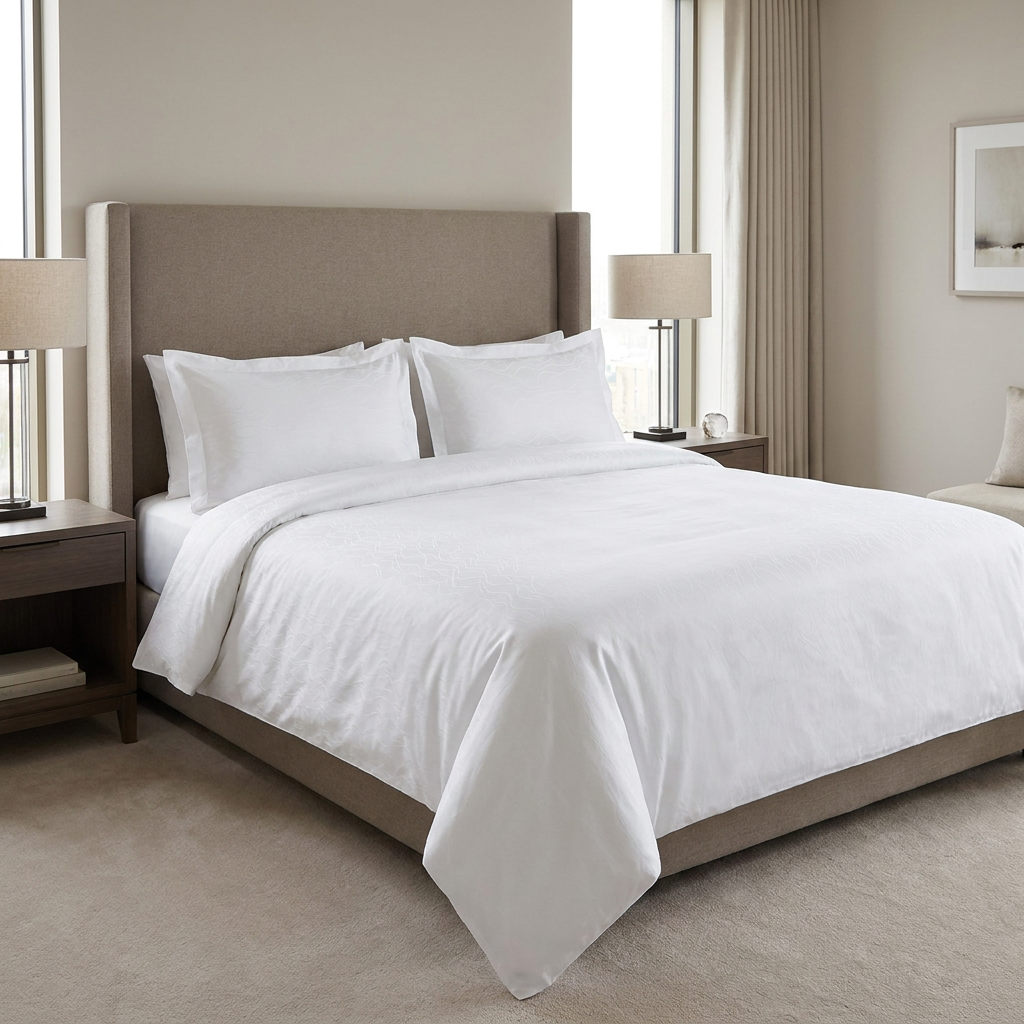
Guests photograph their hotel room beds more than almost any other element of the stay — and share those photographs on social media and review platforms. A beautifully dressed bed — crisp white linen, perfectly aligned fold lines, plump pillows, and a well-placed runner — is a visual asset that generates both social media sharing and review mentions of presentation quality.
The improvement that drives reviews: Consistent, precise bed presentation standards (see the presentation standards guide in this series) convert adequate linen into a visual statement. The same linen presented impeccably generates more positive mentions than superior linen presented carelessly.
Sheet Quality at Upscale and Luxury Tier
At upscale and luxury price points, guests have explicit expectations of sheet quality — and when those expectations are not met, the review impact is significant. A luxury property with 180 TC cotton-polyester sheets will receive sheet-specific negative mentions from guests who feel the quality is inconsistent with the room rate.
The upgrade that drives reviews at luxury tier: Moving to 300–400 TC single-ply Egyptian cotton percale or sateen at upscale tier, and 400–600 TC at luxury tier, eliminates the “expected better sheets for the price” review trigger — and creates the conditions for the “most incredible sheets” positive mention.
4. Responding to Linen-Related Reviews
How a property responds to linen-related reviews — positive and negative — is as important as the linen quality itself in shaping the property’s online reputation.
Responding to Negative Linen Reviews
Acknowledge specifically: Do not respond with generic “we’re sorry you had a less than perfect stay” language to a specific linen complaint. Acknowledge the specific issue: “We’re sorry to hear that you found our towels below the standard you expected — this is not the experience we want our guests to have.”
Explain and commit: Where appropriate, briefly explain what may have caused the issue (e.g., “We are in the process of upgrading our towel inventory”) and commit to a specific improvement: “We have reviewed our linen quality standards in response to guest feedback and have upgraded our bath towels.”
Invite return: A negative review response that acknowledges, explains, and invites the guest to return demonstrates ownership — and often converts a disappointed guest into a returnee.
Use reviews to drive procurement decisions: Linen-specific complaints in reviews are procurement intelligence. A pattern of complaints about thin towels, rough sheets, or flat pillows is a specification audit trigger. Use this review data to justify procurement investment to ownership and management.
Responding to Positive Linen Reviews
Acknowledge specifically: “We’re so pleased you loved our Egyptian cotton sheets — we selected them specifically for the softness and breathability they provide.”
Reinforce the brand message: Positive linen reviews are an opportunity to reinforce your quality positioning: “Providing the most comfortable sleep experience for our guests is a core commitment at [property name], and your feedback means a great deal to our team.”
Share with your team: Positive reviews mentioning specific linen attributes should be shared with housekeeping and procurement teams — reinforcing that their work is noticed and valued by guests.
5. Using Review Data to Build the Business Case for Linen Investment
Procurement managers frequently face the challenge of justifying linen quality upgrades to ownership and management who see only the higher unit cost. Review data provides the commercial argument.
Quantifying the Review-Revenue Connection
The connection between review score and revenue is well-established in hospitality economics:
- A 1-point improvement in TripAdvisor score (on a 5-point scale) is associated with an ability to increase room rates by 11% while maintaining occupancy
- A 1% improvement in review score correlates with a 0.89% increase in RevPAR (Revenue per Available Room)
- Properties with review scores above 4.5 (out of 5) on OTA platforms receive 35% more bookings than comparable properties with scores below 4.0
The procurement argument: If a towel upgrade costing $15,000 (200 rooms × 4 towels × $18.75 per towel) contributes to a 0.1 improvement in review score — which is a conservative estimate for a meaningful towel quality upgrade — the revenue impact at a 200-room property generating $5 million in annual room revenue may be $50,000+. The ROI is compelling.
Building the Investment Case
When presenting a linen upgrade proposal to ownership or management, structure the argument around:
Current state: What does the review data say about current linen quality? Quantify the number and frequency of linen-related negative mentions in the trailing 12 months. Assign an indicative impact on review score.
Proposed investment: Specific products, quantities, unit costs, and total investment required.
Expected outcome: Based on the upgrade level and the property’s current review positioning, what is a reasonable expectation for review improvement? Use industry benchmarks to support the estimate.
Revenue impact: Apply the review score-revenue relationship to estimate the revenue uplift from the expected score improvement. Compare against the investment cost to calculate payback period.
Risk of inaction: What is the continued cost of negative linen reviews on the property’s competitive position, OTA ranking, and rate-setting ability?
6. Proactively Generating Linen-Related Reviews
Beyond simply improving linen quality, properties can actively encourage guests to mention linen in their reviews — maximising the review return on their procurement investment.
In-Stay Communication
Room collateral: A simple in-room card or welcome note that draws attention to the linen quality — “We’ve selected our sheets and towels specifically for your comfort. We hope you enjoy the difference.” — primes guests to notice and evaluate linen quality consciously. Guests who have been prompted to pay attention are more likely to mention the experience in reviews.
Pillow menu card: A pillow menu card beside the bed invites guests to request their preferred pillow type — and draws attention to the fact that the property has invested in pillow quality. Guests who use a pillow menu almost always mention it in reviews.
Linen brand transparency: For properties using a recognisable supplier brand or certified linen (GOTS organic, Egyptian cotton with Association certification), mention this in room collateral: “Your bed is dressed in GOTS-certified organic Egyptian cotton.” Guests appreciate transparency and are more likely to mention specific quality details when they are provided.
At Checkout
Review prompt: A genuine, non-pushy checkout message — “We hope you slept well. Your feedback on our guest review platforms means a great deal to us and helps us continue improving.” — increases the likelihood that satisfied guests will leave a review.
Follow-up email: A post-stay email (sent 24–48 hours after checkout) that thanks the guest and includes a direct link to the review platform of your choice. Reference the sleep experience specifically: “We hope the comfort of your room made your stay memorable.”
7. Linen Quality Audit: Using Review Data as a Diagnostic Tool
Review data is not just a marketing metric — it is a quality management tool. A systematic review of linen-related review mentions reveals specification gaps, presentation inconsistencies, and laundering issues that internal quality checks may miss.
Monthly Review Audit Process
Extract linen-related reviews: Search your review database (TripAdvisor, Booking.com, Google, Expedia) for keywords: sheets, towels, pillows, duvet, blanket, bed, linen, mattress, soft, rough, thin, thick, clean, stained, musty, comfortable, uncomfortable
Categorise by issue type: Group mentions by specific issue (towel quality, pillow quality, sheet quality, odour, staining, presentation) and by sentiment (positive, negative, neutral)
Identify patterns: Are the same issues mentioned repeatedly? Is one specific room type or floor generating more linen complaints than others? Are complaints concentrated in a specific time period (suggesting a laundering issue or a new linen batch)?
Prioritise corrective action: Address the most frequently mentioned issues first. A pattern of towel complaints is a specification or laundering issue; a pattern of presentation complaints is a training issue; a pattern of odour complaints is a laundering hygiene issue.
Track improvement: After implementing corrective action, track the frequency of the relevant complaint category in subsequent reviews. A declining complaint frequency confirms the corrective action is effective.
8. Case Study Framework: The Towel Upgrade Review Impact
The following framework illustrates how a towel specification upgrade can be tracked against review impact — providing a model for other procurement investments:
Before: 200-room upscale hotel using 400 GSM cotton-polyester blend towels. Review analysis shows 23 mentions of thin or inadequate towels in trailing 12-month reviews. Overall review score: 8.1/10.
Investment: Upgrade to 520 GSM 100% ring-spun Egyptian cotton towels at all par levels. Total investment: $28,000.
After (12 months post-upgrade): Review analysis shows 3 mentions of towel quality concerns (down from 23); 41 positive mentions of towel quality (new). Overall review score: 8.4/10.
Revenue impact (estimated): 0.3 review score improvement on a $6M revenue base = approximately $160,000 additional revenue capacity (based on industry rate-review correlation benchmarks).
ROI: $28,000 investment; estimated $160,000 revenue impact. Payback period: approximately 2 months.
This framework — before/after review tracking linked to specific procurement changes — is the most persuasive format for presenting linen investment cases to hotel ownership and management.
Summary
The relationship between hotel linen quality and guest reviews is direct, measurable, and commercially significant. Linen is one of the highest-leverage procurement categories for review score improvement — and review score improvement is one of the most reliable drivers of revenue growth in the modern hospitality market.
The highest-impact actions for procurement managers seeking to use linen quality to build their property’s reputation are:
- Audit current review data for linen-related mentions and identify the most frequently cited issues
- Prioritise towel quality upgrades — the highest-review-return single specification change available
- Address pillow quality — the primary driver of sleep-related review content
- Establish and enforce consistent bed presentation standards
- Build the investment case for linen upgrades using review data and revenue impact modelling
- Proactively encourage linen-related review mentions through in-stay communication
- Monitor review impact after each specification change to build an evidence base for future investment decisions
Linen procurement is not just a cost centre — it is a revenue driver. Procurement managers who understand and communicate this connection are better positioned to secure the investment their properties need, and to deliver the guest experience that drives the reviews, bookings, and rates that define commercial success.
Galaxy Hotel Supplies helps hotel procurement managers select linen specifications that deliver measurable guest experience impact — backed by product quality, certification, and laundering durability that sustains that impact throughout the linen’s operational life. Contact our team to discuss which specification upgrade will deliver the highest return for your property.

Behind the Quality: Cotton Multi-Color Towel Burn Test
https://galaxyhotelsupplies.com/wp-content/uploads/2025/08/产品测评-毛巾.mp4 Behind the Quality: Cotton Multi-Color Towel Burn Test When it comes to hotel supplies,…

Safe & Sustainable: The 2026 Guide to Hospitality Electric Kettles
Professional insights on choosing hotel-grade kettles that prioritize guest safety, double-wall insulation, and energy conservation.
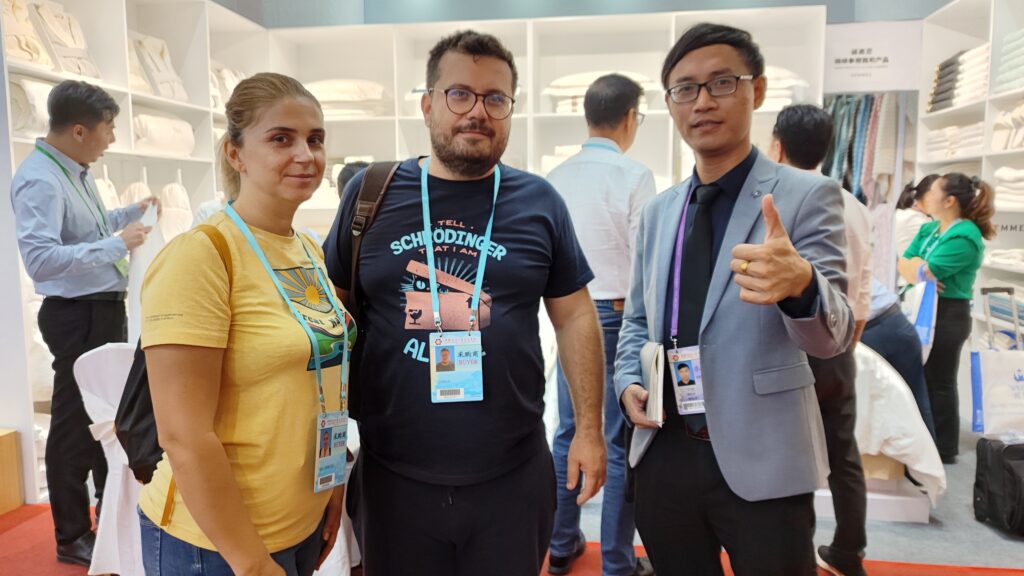
Galaxy Hotel Supplies at Canton Fair: Elevate Hospitality with Premium Textiles
As a leading exhibitor at the Canton Fair, Galaxy Hotel Supplies showcases its expertise in…
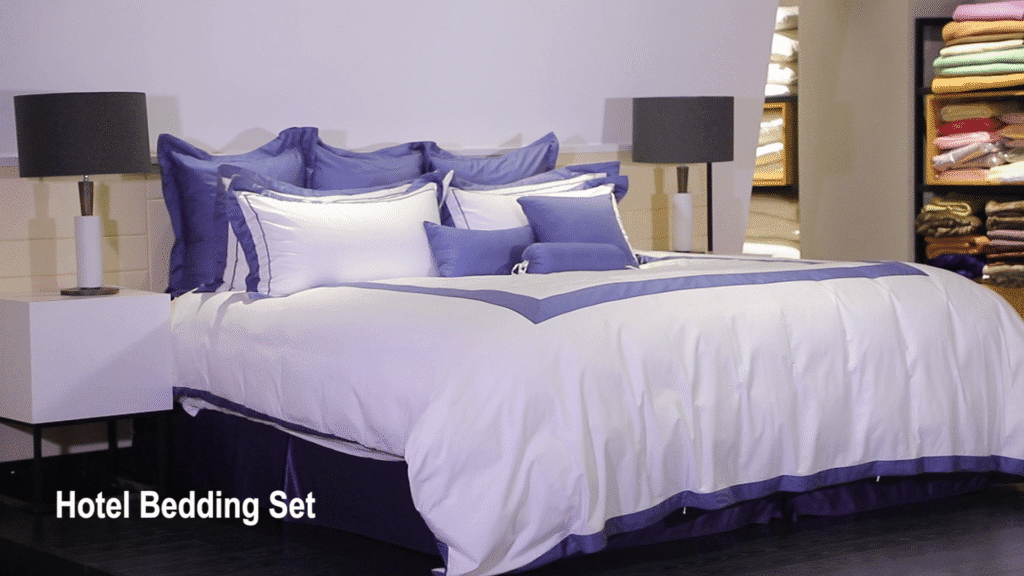
Luxury Hotel Bedding Set for a Five-Star Guest Experience
Luxury Hotel Bedding Set for a Five-Star Guest Experience When it comes to creating a…
The Ultimate Comfort: How Premium Robes Transform the Guest Stay
A professional guide for hotel buyers on selecting the right bathrobe materials and weights to…

Why Blush is the “New Neutral” for Table Settings
https://galaxyhotelsupplies.com/wp-content/uploads/2025/12/粉色肌理纹台布v.mp4 Why Blush is the “New Neutral” for Table Settings When we think of neutrals,…