
Sustainable Hotel Supplies: What to Look for When Sourcing
Published by Galaxy Hotel Supplies | For Hotel Procurement Managers
Sustainability has moved from a brand differentiator to a baseline expectation in the hospitality industry. Guests increasingly research a property’s environmental credentials before booking. Corporate travel programs require supplier ESG compliance. Investors and ownership groups are integrating sustainability metrics into asset performance frameworks. And in many markets, regulatory requirements around chemical use, waste, and carbon reporting are tightening.
For hotel procurement managers, this creates both pressure and opportunity. Sustainable sourcing is no longer a separate agenda item — it is a procurement competency. The challenge is navigating an increasingly crowded landscape of certifications, supplier claims, and green marketing language to identify what genuinely reduces environmental impact, what protects your brand, and what delivers long-term operational value.
This guide gives procurement managers a practical framework for sustainable hotel supply sourcing — covering what to look for, what to verify, and where greenwashing is most common.
1. Why Sustainable Sourcing Matters for Hotel Procurement
Before examining specific criteria, it is worth understanding why sustainable sourcing decisions matter beyond marketing:
Guest expectations are measurable. Multiple hospitality industry surveys consistently show that a significant majority of travelers — particularly in the 25–45 demographic — consider a hotel’s sustainability credentials when choosing where to stay, and are willing to pay a premium for properties with credible environmental commitments.
Regulatory risk is increasing. The EU, UK, and a growing number of Asian markets are implementing extended producer responsibility (EPR) regulations, chemical restriction frameworks, and mandatory carbon reporting requirements that will directly affect hotel supply chains within the next five years.
Sustainable products often cost less to operate. Lower wash temperature requirements, longer product lifespans, reduced chemical inputs, and lighter packaging all translate to operational savings — not just environmental benefit.
Supply chain transparency is becoming a compliance requirement. Major hotel brands and corporate travel accounts increasingly require suppliers to demonstrate environmental and social compliance through verified certification, not self-declaration.
2. The Greenwashing Problem — and How to Spot It
The sustainability credentials of hotel supply products are among the most frequently misrepresented in any procurement category. Common greenwashing tactics include:
Vague claims without verification: “Eco-friendly,” “natural,” “green,” and “sustainable” are marketing terms with no standardized meaning. They require no verification and carry no accountability.
Irrelevant certifications: A supplier displaying a food safety certification on a textile product, or a general environmental management certificate that does not apply to the specific product, is using certification as decoration rather than evidence.
Partial claims presented as whole: A product described as “made with organic cotton” may contain 10% organic cotton and 90% conventionally produced polyester. Without a full fiber content declaration, partial claims are misleading.
Expired or unverifiable certificates: Certification logos displayed without certificate numbers, issue dates, or expiry dates cannot be independently verified and should be treated with skepticism.
Carbon offsetting as a substitute for reduction: Suppliers claiming carbon neutrality through offsetting alone — without documented reduction efforts — are not meaningfully addressing their environmental impact.
How to respond: Require specific, verifiable certifications for every sustainability claim. Ask for certificate numbers and verify them independently through the issuing body’s online database. Treat unverifiable claims as absent.
3. Key Certifications to Require — and What They Actually Mean
Textiles (Linen, Towels, Uniforms, Bedding)
OEKO-TEX® Standard 100 Tests every component of the finished product — fiber, dye, finishing agents, buttons, zippers — for harmful substances. Does not address environmental production practices, but is the essential baseline for any guest-contact textile. Every hotel textile supplier should hold this as a minimum.
GOTS — Global Organic Textile Standard The most rigorous organic textile certification. Requires a minimum of 70% certified organic fiber content (95% for “organic” labeling), and covers the entire supply chain from fiber to finished product — including chemical use, wastewater treatment, and social compliance. If you are sourcing organic cotton products, GOTS is the only certification that provides meaningful assurance.
Bluesign® Focuses on responsible resource use in textile manufacturing — water, energy, and chemicals. Particularly relevant for dyeing and finishing processes, which are among the most environmentally impactful stages of textile production. A Bluesign® certified fabric has been produced with verified reductions in chemical use and wastewater impact.
Cradle to Cradle Certified™ Evaluates products across five categories: material health, material reutilization, renewable energy, water stewardship, and social fairness. A comprehensive framework for suppliers committed to circular economy principles.
Fair Trade Certified Addresses social sustainability — fair wages, safe working conditions, and community investment in the supply chain. Increasingly required by hotel brands with strong CSR commitments.
Amenities & Consumables
Ecocert / COSMOS The leading certification for natural and organic cosmetics and toiletries. COSMOS Organic requires a minimum of 95% natural ingredients and certified organic content. Relevant for hotel toiletry programs moving away from synthetic formulations.
Leaping Bunny / PETA Cruelty-Free Certifies that no animal testing has been conducted at any stage of product development. Increasingly expected by guests, particularly in premium lifestyle and boutique hotel segments.
Plastic-free or recyclable packaging certification Look for suppliers who can document packaging material composition and recyclability. The EU Single-Use Plastics Directive and equivalent legislation in other markets is driving rapid change in amenity packaging — ensure your supplier is ahead of, not behind, regulatory requirements.
Manufacturing & Supply Chain
ISO 14001 — Environmental Management Systems Certifies that a manufacturer has a documented system for monitoring and reducing its environmental impact. Does not certify specific outcomes, but demonstrates organizational commitment to environmental management.
SA8000 — Social Accountability The leading social compliance standard for manufacturing. Covers child labor, forced labor, health and safety, freedom of association, and working hours. Relevant for hotel brands with strong human rights commitments in their procurement policies.
B Corp Certification A holistic assessment of a company’s social and environmental performance, accountability, and transparency. A useful signal of overall supplier values, though not a substitute for product-specific certifications.
4. Sustainable Fiber & Material Selection
Cotton
Conventional cotton is one of the most chemically intensive crops globally — accounting for a disproportionate share of global pesticide use relative to the land area it occupies.
Better Cotton (BCI): The most widely adopted sustainable cotton standard globally. Focuses on reducing chemical inputs, water use, and improving farmer livelihoods. Not organic, but represents a significant improvement over conventional. Many major hotel supply manufacturers source Better Cotton.
Organic cotton (GOTS certified): Grown without synthetic pesticides or fertilizers. Lower environmental impact but higher cost and more limited availability. Appropriate for luxury and eco-positioned properties.
Recycled cotton: Produced from post-industrial or post-consumer cotton waste. Reduces virgin fiber demand and diverts textile waste from landfill. Quality can vary — confirm fiber length and blend ratio with your supplier.
Bamboo
Bamboo is frequently marketed as a sustainable alternative to cotton. The reality is more nuanced:
- Bamboo grows rapidly without pesticides and sequesters carbon effectively
- However, conventional bamboo-to-fiber processing uses harsh chemicals (sodium hydroxide, carbon disulfide) that can be environmentally damaging
- Lyocell-process bamboo (often branded as Bamboo Lyocell or Bamboo Tencel) uses a closed-loop solvent process that recaptures and reuses chemicals — this is the genuinely sustainable option
- Always ask your supplier which process was used to convert bamboo to fiber
Recycled Polyester (rPET)
Produced from recycled PET plastic bottles or post-consumer textile waste. Reduces demand for virgin petroleum-based fiber and diverts plastic waste. Appropriate for pool towels, outdoor furniture covers, and non-guest-contact applications where softness is less critical. Look for GRS (Global Recycled Standard) certification to verify recycled content claims.
Tencel™ / Lyocell
Produced from sustainably sourced wood pulp using a closed-loop solvent process. Biodegradable, exceptionally soft, and produced with minimal water and chemical waste. Increasingly used in luxury bedding and spa linen. Higher cost than cotton but delivers a premium guest experience with strong sustainability credentials.
5. Packaging & Delivery Sustainability
Product sustainability does not end at the fiber level. Packaging and logistics are significant contributors to a hotel supply chain’s overall environmental footprint.
What to evaluate in supplier packaging:
- Is primary packaging (individual product wrapping) recyclable, compostable, or eliminated entirely?
- Is secondary packaging (cartons, boxes) made from recycled content and recyclable?
- Does the supplier minimize packaging volume relative to product weight?
- Is plastic stretch wrap used on pallets? Can it be replaced with paper or recycled-content alternatives?
Logistics considerations:
- Suppliers closer to your region of operation have lower transport emissions — factor shipping distance into your sustainability assessment
- Full container loads (FCL) have lower per-unit emissions than less-than-container (LCL) shipments — consolidate orders where possible
- Ask suppliers whether they have documented carbon reduction targets for their logistics operations
What to require: A written packaging specification from every supplier, confirming material composition and recyclability of all packaging components.
6. Water & Chemical Use in Manufacturing
Textile manufacturing — particularly dyeing and finishing — is one of the most water-intensive and chemically intensive industrial processes globally. For hotel procurement managers, this is an area where supplier practices have significant environmental impact and increasing regulatory relevance.
Key questions to ask suppliers:
- Do you treat wastewater from dyeing and finishing processes before discharge? Can you provide documentation?
- Do you use ZDHC (Zero Discharge of Hazardous Chemicals) compliant chemicals in your manufacturing process?
- What is your water consumption per kilogram of finished textile, and what reduction targets do you have?
- Are your dyeing processes certified under Bluesign® or an equivalent standard?
ZDHC (Zero Discharge of Hazardous Chemicals): An industry initiative requiring the elimination of hazardous chemicals from textile manufacturing and wastewater. ZDHC compliance is increasingly required by major hotel brands and corporate procurement standards.
7. Social Sustainability — The Often-Overlooked Dimension
Environmental certifications address ecological impact. Social sustainability addresses the people in your supply chain — and is equally important for a credible ESG procurement program.
Key social compliance criteria:
- No child labor or forced labor at any tier of the supply chain
- Safe and healthy working conditions (confirmed through audit, not self-declaration)
- Fair wages meeting or exceeding local legal requirements
- Freedom of association and collective bargaining rights
- No excessive working hours
How to verify:
- Request copies of the most recent third-party social compliance audit (SMETA, BSCI, or equivalent)
- For SA8000 certified suppliers, verify the certificate through the Social Accountability International database
- For significant supply relationships, commission an independent social audit through organizations such as Bureau Veritas, SGS, or Elevate
Why this matters for procurement: An increasing number of jurisdictions — including the EU, UK, and Australia — have introduced or are introducing mandatory supply chain due diligence legislation that requires companies to identify and address human rights risks in their supply chains. Proactive social compliance auditing positions your hotel group ahead of this regulatory curve.
8. Building a Sustainable Sourcing Policy
Individual procurement decisions are more effective when they sit within a documented sustainable sourcing policy that provides consistent criteria across categories, properties, and procurement cycles.
Core elements of a hotel sustainable sourcing policy:
Baseline certification requirements: Define the minimum certifications required for each product category (e.g., OEKO-TEX® Standard 100 mandatory for all guest-contact textiles; GOTS required for products marketed as organic).
Preferred supplier criteria: Define additional sustainability criteria that qualify suppliers for preferred status — Bluesign® certification, ZDHC compliance, SA8000 or SMETA audit, carbon reduction targets.
Greenwashing rejection criteria: Define what claims are insufficient (unverified “eco-friendly” labeling, expired certificates, partial organic content claims) and require removal from supplier marketing materials used in your procurement process.
Supplier development commitment: For existing suppliers who do not yet meet preferred criteria, define a development pathway — a timeline and support framework for achieving certification — rather than immediate disqualification.
Annual review: Sustainability standards evolve. Build an annual review of your sourcing policy into your procurement calendar to ensure criteria remain current with regulatory developments and industry best practice.
9. Practical Starting Points — Where to Begin
For procurement managers building or strengthening a sustainable sourcing program, the following sequence is recommended:
Step 1 — Audit your current supplier base. Map existing suppliers against the certification criteria above. Identify gaps and prioritize by spend volume and guest impact.
Step 2 — Establish OEKO-TEX® Standard 100 as the non-negotiable baseline. This is the most widely held certification in hotel textile supply and the minimum credible standard for guest-contact products.
Step 3 — Address packaging next. Packaging sustainability is often the fastest win — many suppliers can transition to recyclable packaging within a single order cycle.
Step 4 — Engage your top suppliers on a certification roadmap. Work with existing suppliers to develop a timeline for achieving GOTS, Bluesign®, or ZDHC compliance. Many suppliers are willing to invest in certification if a significant customer commits to a long-term relationship.
Step 5 — Integrate sustainability criteria into your RFQ and supplier selection process. Make certification requirements explicit in every request for quotation, and weight sustainability criteria in your supplier evaluation scorecard.
Step 6 — Communicate progress internally and externally. Document your sustainable sourcing achievements for annual sustainability reporting, brand communications, and corporate travel account requirements.
Summary
Sustainable hotel supply sourcing is not about accepting higher costs or lower quality in the name of environmental responsibility. It is about building a supply chain that is transparent, resilient, and aligned with where the hospitality industry — and its guests — are heading.
The procurement managers who lead in this area will not be those who make the loudest sustainability claims. They will be those who require verifiable certifications, ask the right questions of their suppliers, build sustainability criteria into every sourcing decision, and track progress systematically over time.
The framework in this guide provides the foundation. The competitive advantage comes from applying it consistently.
Galaxy Hotel Supplies is committed to sustainable manufacturing — holding OEKO-TEX® Standard 100 certification across our full product range and actively progressing GOTS and Bluesign® certification for key product lines. Contact our team to discuss our sustainability credentials or request certification documentation.
- #HotelProducts
- #HospitalityTrends
- #HotelBranding
- #B2BHospitality
- #LuxuryHotelBedding
- #CommercialTextiles
- #LuxuryHotels
- #HotelDesign
- #HotelStyle
- #LuxuryTowels
- #HotelRoomDesign
- #HotelManagement
- #PremiumLinens
- #ShowroomTour
- Eliya
- #HotelDecor
- Galaxy
- #GuestSatisfaction
- #HospitalityLinen
- #HospitalityExpo
- #HotelComfort
- #LuxuryHotelSupplies
- #LuxuryLinens
- #HotelIndustry
- #LuxuryHotel
- #HotelAmenities
- #TradeShow
- #HospitalityTextiles
- #HotelTowels
- #HospitalityDesign
- #LuxuryBedding
- #HotelBedding
- #HotelLinens
- #HotelOperations
- #GALAXYHotelSupplies
- #HotelLinen
- #LuxuryHospitality
- #GuestComfort
- #GuestExperience
- #HotelTextiles
- #HotelProcurement
- #HospitalityIndustry
- #HospitalitySupplies
- #HotelSupplies
- #GALAXYHospitality
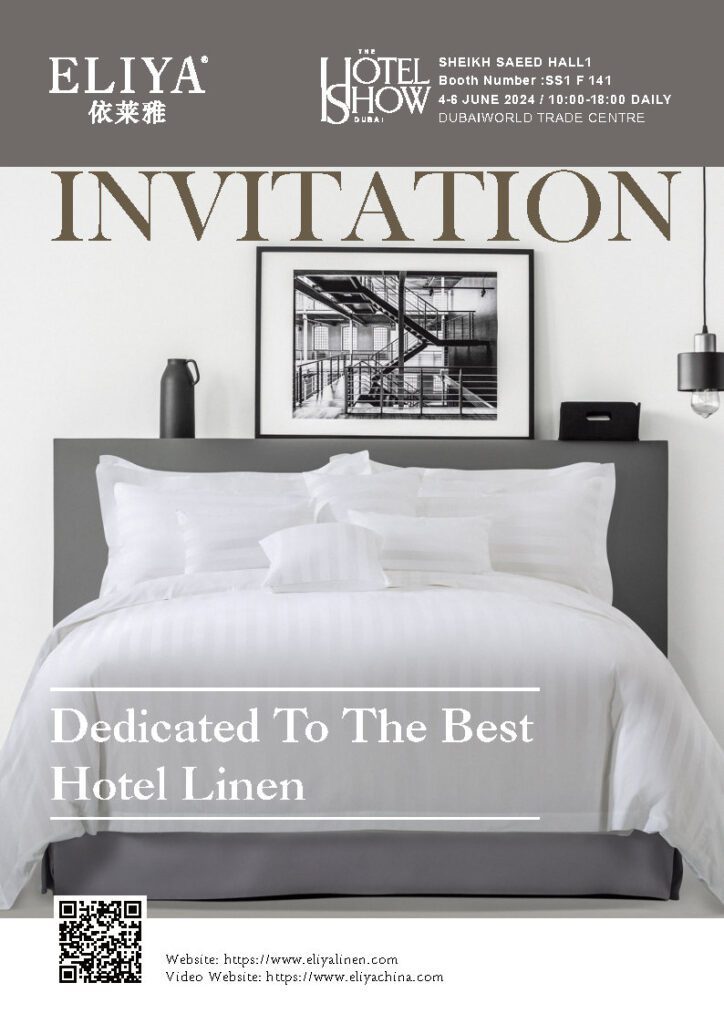
Discover the Latest Trends in Hotel Supplies at the 2024 Dubai Show
2024 Dubai Show Invitation Letter Dear valued customer, We are pleased to invite you to…

GALAXY HOSPITALITY Luxury Dyed Satin-Edge Hotel Towels: Elevate Guest Comfort with Artisan Craftsmanship
Design Philosophy: Where Elegance Meets Functionality Galaxy Hotel Supplies redefines hotel linen luxury with its Dyed…

Premium Waffle Cotton Towels for Modern Hospitality
https://galaxyhotelsupplies.com/wp-content/uploads/2025/11/华夫格白色毛巾-.mp4 Waffle cotton towels have become one of the most popular choices in modern hospitality,…

Hotel Luggage Carts – Elevating Guest Service in Hospitality
Hotel Luggage Carts – Elevating Guest Service in Hospitality In the hospitality industry, first impressions…

Why Every 5-Star Stay Begins with a Luxury Hotel Bed Mattress
Why Every 5-Star Stay Begins with a Luxury Hotel Bed Mattress When guests check into…

More Than Just a Towel: It’s a Statement
https://galaxyhotelsupplies.com/wp-content/uploads/2025/12/毛巾-2.mp4 More Than Just a Towel: It’s a Statement In the competitive world of hospitality,…