
How to Reduce Hotel Linen Costs Without Compromising Guest Experience
Published by Galaxy Hotel Supplies | For Hotel Procurement Managers
Linen is one of the largest recurring operational expenses in hotel management. For a mid-sized property, annual linen spend — covering bedding, towels, table linen, and replacement cycles — can run into hundreds of thousands of dollars. When occupancy fluctuates and margins tighten, linen costs are a natural target for reduction.
But cost-cutting in linen procurement is a high-risk exercise. Buy cheap, and you replace faster, generate more guest complaints, and erode the perception of quality that keeps guests coming back. The goal is not to spend less — it is to spend smarter.
This guide gives hotel procurement managers a practical framework for reducing linen costs without degrading the guest experience: from procurement strategy and supplier negotiation to laundering efficiency and inventory management.
1. Understand Your True Cost of Linen — Before You Cut Anything
The most common mistake in linen cost reduction is optimizing unit price without understanding total cost of ownership. A linen item that costs 30% less but lasts half as long costs more over its operational lifespan — and delivers a worse guest experience in the process.
Calculate cost-per-use before comparing suppliers:
Cost per use = Unit purchase price ÷ Expected wash cycle lifespan
| Example | Unit Price | Wash Cycle Lifespan | Cost Per Use |
|---|---|---|---|
| Supplier A (budget) | $8.00 | 80 cycles | $0.100 |
| Supplier B (mid-tier) | $12.00 | 180 cycles | $0.067 |
| Supplier C (premium) | $16.00 | 280 cycles | $0.057 |
In this scenario, the premium supplier delivers the lowest cost per use — and the best guest experience throughout the linen’s lifespan.
Total cost of ownership also includes:
- Replacement frequency and associated procurement administration costs
- Laundering costs (heavier GSM linens use more water, energy, and drying time)
- Storage costs for buffer stock
- Guest complaint costs associated with degraded linen quality
- Staff time spent sorting and discarding worn linen
Build a full cost model before making any procurement decisions based on unit price alone.
2. Consolidate Your Supplier Base
Many hotel operations — particularly multi-property groups — source linen from multiple suppliers across different categories, regions, and contract terms. This fragmentation is expensive.
The cost of supplier fragmentation:
- Lost volume leverage across suppliers
- Higher per-unit pricing due to smaller order quantities
- Increased procurement administration (multiple POs, invoices, quality processes)
- Inconsistent quality and specification across properties
- Weaker supplier relationships and lower service priority
Consolidation strategy:
- Audit your current supplier base across all linen categories (bedding, towels, table linen, uniforms)
- Identify suppliers capable of covering multiple categories at consistent quality
- Negotiate consolidated volume agreements that deliver better unit pricing, priority production scheduling, and improved payment terms
- Retain a secondary supplier per category for continuity — but concentrate volume with your primary partner
Realistic savings from consolidation: 8–15% reduction in unit pricing through volume leverage, plus significant reduction in procurement administration costs.
3. Optimize Your Par Level — Stop Carrying Excess Inventory
Par level is the number of linen sets held per room to support operations — typically expressed as a ratio (e.g., 3-par means three complete sets per room: one in use, one in laundry, one in storage).
The cost of excess inventory:
- Capital tied up in linen sitting in storage
- Higher storage space requirements
- Increased risk of linen damage, theft, and write-off during extended storage
- Larger replacement orders when stock is eventually cycled out
The cost of insufficient inventory:
- Emergency procurement at premium pricing
- Guest-facing shortages during peak occupancy
- Accelerated wear from insufficient rotation
Finding your optimal par level:
- Audit current linen inventory against actual occupancy and laundry cycle times
- Industry standard for most hotel operations: 3-par for bedding, 3–4 par for towels
- High-occupancy properties with fast laundry turnaround may operate at 2.5-par without service risk
- Reduce buffer stock gradually and monitor for shortages before committing to a lower par level
Savings potential: Reducing from 4-par to 3-par across a 200-room property can free up significant capital and reduce annual replacement spend by 20–25%.
4. Extend Linen Lifespan Through Better Laundering Practices
Industrial laundering is the primary cause of linen degradation. High temperatures, aggressive detergents, mechanical stress, and improper drying all shorten linen lifespan — often unnecessarily.
Laundering practices that extend linen life:
Wash temperature: Wash at the lowest effective temperature for the soil level. Most hotel linen can be effectively cleaned at 60°C rather than 85°C. Reducing wash temperature from 85°C to 60°C can extend linen lifespan by 20–30% while also reducing energy costs.
Detergent concentration: Over-dosing detergent is one of the most common causes of premature linen degradation. Work with your laundry chemical supplier to calibrate dosing accurately for your water hardness, load size, and soil level.
Bleach use: Chlorine bleach damages cotton fibers with repeated use. Reserve chlorine bleach for heavily soiled items only. Use oxygen-based bleach alternatives for routine whiteness maintenance — they are less damaging and still effective.
Drying temperature: Over-drying at excessive temperatures degrades fabric faster than almost any other laundering factor. Use moisture sensors on tumble dryers and remove linen promptly when dry. Residual heat in the drum continues to damage fabric after the cycle ends.
Load size: Overloading washing machines reduces cleaning effectiveness and increases mechanical stress on fabric. Follow manufacturer-recommended load weights — typically 80% of drum capacity.
Linen sorting: Separate linen by soil level and fabric type before washing. Washing heavily soiled kitchen linen with guest room linen in the same cycle is both inefficient and damaging to lighter fabrics.
Potential lifespan extension: Optimized laundering practices can extend linen operational life by 25–40% — a significant reduction in annual replacement spend with no impact on guest experience.
5. Implement a Linen Tracking and Loss Prevention Program
Linen loss — through theft, misplacement, incorrect discard, and off-site removal by guests — is a significant and frequently underestimated cost in hotel operations.
Industry benchmark: Hotels typically lose 10–20% of their linen inventory annually to untracked causes. For a 200-room property, this can represent tens of thousands of dollars in annual replacement cost.
Practical loss prevention measures:
Inventory audits: Conduct monthly linen counts by category and location. Track variance against expected consumption to identify loss patterns early.
Room-to-laundry tracking: Implement a system that tracks linen from room collection through laundry and back to storage. Even a basic manual tally system significantly reduces untracked loss.
RFID linen tracking: For larger properties, RFID tagging provides real-time inventory visibility, identifies high-loss locations, and automates reorder triggers. Initial investment is significant but typically delivers ROI within 18–24 months for properties with high linen turnover.
Staff training: Many linen losses are the result of incorrect discard decisions — housekeeping staff disposing of usable linen that could be repaired or downgraded. Train staff on discard criteria and implement a formal sign-off process for linen write-offs.
Guest linen removal: Towel and robe removal by guests is a well-documented issue. Properties that offer branded items for purchase at checkout report reduced untracked removal and an additional revenue stream.
Savings potential: A structured loss prevention program typically reduces annual linen loss by 30–50%, directly reducing replacement procurement spend.
6. Introduce a Linen Life-Cycle Management System
Most hotel linen does not fail catastrophically — it degrades gradually. A life-cycle management system captures value at every stage of a linen item’s operational life rather than replacing it prematurely or using it past the point where it affects guest experience.
Life-cycle stages for hotel linen:
Stage 1 — New: Deploy in premium guest-facing positions (guest rooms, F&B service). Full quality, full guest visibility.
Stage 2 — Mid-life: After 80–100 wash cycles, linen that no longer meets front-of-house standards can be downgraded to back-of-house use — staff bathrooms, training rooms, storage areas.
Stage 3 — End of operational life: Linen that has completed its guest-facing and back-of-house lifespan can be repurposed as cleaning rags, donated to local charities, or processed through textile recycling programs.
Benefits of life-cycle management:
- Extracts maximum value from every linen item purchased
- Reduces premature disposal of serviceable linen
- Supports sustainability reporting and ESG commitments
- Reduces total annual replacement procurement volume
7. Negotiate Smarter — Beyond Unit Price
Unit price is only one lever in linen procurement negotiation. Experienced procurement managers negotiate across multiple dimensions that collectively deliver greater value than price reduction alone.
Negotiation levers beyond unit price:
Payment terms: Extended payment terms (60–90 days net) improve cash flow without affecting unit price. For high-volume buyers, this represents significant working capital value.
Volume rebates: Negotiate tiered rebates triggered at annual volume thresholds. These reward loyalty and growth without requiring upfront price concessions.
Free samples and pilots: Negotiate complimentary sample packs and pilot quantities for new product evaluations — reducing the cost of supplier assessment.
Priority production scheduling: Negotiate guaranteed production slots during peak demand periods. This reduces the risk of supply disruption without a price premium.
Consignment or buffer stock agreements: Some suppliers will hold buffer stock on consignment for key accounts — reducing your inventory investment while maintaining supply security.
Bundled category pricing: If consolidating suppliers, negotiate bundle pricing across multiple categories (bedding + towels + table linen) rather than pricing each category independently.
8. Right-Size Your Specification to Your Property Tier
One of the most straightforward — and frequently overlooked — cost reduction opportunities is ensuring that linen specifications match your property tier and guest expectations, rather than defaulting to the highest available specification across all categories.
Specification right-sizing by tier:
| Property Tier | Recommended Bedding TC | Recommended Towel GSM | Duvet Fill |
|---|---|---|---|
| Economy / Budget | 180–220 TC | 300–380 GSM | Hollow fiber |
| Midscale | 220–300 TC | 380–450 GSM | Down alternative |
| Upscale | 300–400 TC | 450–550 GSM | Down alternative / duck down |
| Luxury | 400–600 TC | 550–650 GSM | Goose down |
| Ultra-Luxury | 600+ TC | 650–750 GSM | High fill-power goose down |
Where over-specification is most common:
- Economy properties purchasing upscale-tier towel GSM that exceeds guest expectation and increases laundry costs
- Mid-market hotels sourcing Egyptian cotton bedding where combed cotton would deliver equivalent guest satisfaction at lower cost
- All tiers: purchasing higher TC bedding than is perceptible to guests under normal room conditions
Where under-specification is most costly:
- Towels: guests notice towel quality immediately — this is not an area to cut below your tier benchmark
- Pillows: comfort drives reviews; under-specification here generates measurable negative feedback
9. Review Your Linen Replacement Triggers
Many hotel operations replace linen on fixed schedules (e.g., every 12 months) regardless of actual condition — wasting usable inventory and increasing procurement spend unnecessarily.
Condition-based replacement is more cost-effective:
Establish clear, objective criteria for linen discard — based on appearance, integrity, and guest experience impact rather than age alone:
- Bedding: Replace when whiteness has degraded visibly, fabric has pilled or thinned, or seam integrity is compromised
- Towels: Replace when absorbency has declined noticeably, fabric has hardened, loops have broken down, or edges have frayed
- Table linen: Replace when stains are permanent, fabric has thinned at fold lines, or hems have unraveled
Train housekeeping supervisors to apply consistent discard criteria and document discard decisions. This both prevents premature disposal and ensures genuinely worn linen is removed before it affects guest experience.
10. Align Procurement with Sustainability — and Reduce Costs in the Process
Sustainable linen procurement and cost efficiency are increasingly aligned — not in tension.
Areas where sustainability reduces cost:
- Lower wash temperatures: Reduces energy cost and extends linen lifespan simultaneously
- Reduced chemical use: Lower detergent and bleach consumption reduces supply costs and linen degradation
- Textile recycling programs: Some suppliers and recycling partners offer credits or reduced pricing on new orders in exchange for end-of-life linen return
- Longer-lasting fabrics: GOTS-certified organic cotton and sustainably processed fibers often deliver superior durability, reducing replacement frequency
- Reduced guest linen change frequency: Opt-in linen reuse programs (where guests choose to reuse towels and bedding during multi-night stays) directly reduce laundry volume and linen wear — and are positively received by environmentally conscious guests
Summary
Reducing hotel linen costs without compromising guest experience requires a shift from price-focused purchasing to total-cost-of-ownership management. The highest-impact actions are:
- Calculate cost-per-use before comparing suppliers
- Consolidate your supplier base to leverage volume
- Optimize par levels to release tied-up inventory capital
- Extend linen lifespan through better laundering practices
- Implement loss prevention and life-cycle management
- Negotiate across multiple dimensions, not just unit price
- Right-size specifications to your property tier
- Replace based on condition, not fixed schedules
Applied systematically, these measures can reduce total linen expenditure by 20–35% over a 12–24 month period — without a single guest noticing the difference.
Galaxy Hotel Supplies manufactures premium hotel linen for hospitality brands worldwide, with a focus on durability, consistency, and total cost of ownership. Contact our team for a procurement consultation or bulk quote.
- #HotelProducts
- #HospitalityTrends
- #HotelBranding
- #B2BHospitality
- #LuxuryHotelBedding
- #CommercialTextiles
- #LuxuryHotels
- #HotelDesign
- #HotelStyle
- #LuxuryTowels
- #HotelRoomDesign
- #HotelManagement
- #PremiumLinens
- #ShowroomTour
- Eliya
- #HotelDecor
- Galaxy
- #GuestSatisfaction
- #HospitalityLinen
- #HospitalityExpo
- #HotelComfort
- #LuxuryHotelSupplies
- #LuxuryLinens
- #HotelIndustry
- #LuxuryHotel
- #HotelAmenities
- #TradeShow
- #HospitalityTextiles
- #HotelTowels
- #HospitalityDesign
- #LuxuryBedding
- #HotelBedding
- #HotelLinens
- #HotelOperations
- #GALAXYHotelSupplies
- #HotelLinen
- #LuxuryHospitality
- #GuestComfort
- #GuestExperience
- #HotelTextiles
- #HotelProcurement
- #HospitalityIndustry
- #HospitalitySupplies
- #HotelSupplies
- #GALAXYHospitality
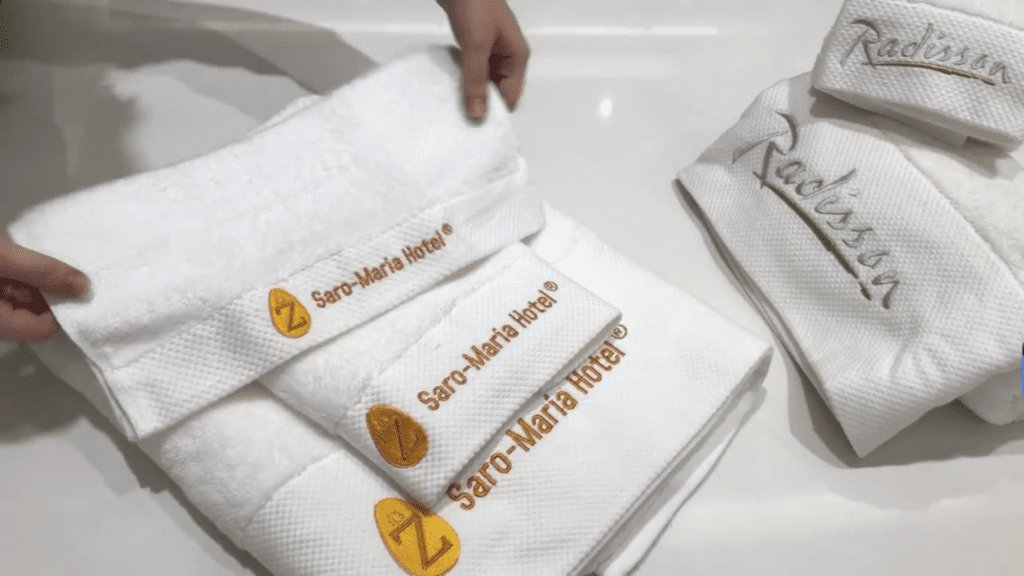
Showroom Series: Choosing the Right Towel for Your Hotel
Discover the range of professional bath linens featured in our showroom, from classic terry to…

Elegant Brown Waffle Cotton Towels for Modern Hospitality
https://galaxyhotelsupplies.com/wp-content/uploads/2025/11/华夫格毛巾.mp4 Brown waffle cotton towels bring a sophisticated, nature-inspired warmth to hotel bathrooms and spa…

The Weight of Luxury: Why GSM is the Key to Towel Quality
A technical guide explaining Grams per Square Meter (GSM) and how to choose the right…

Luxury Hotel Amenities: How Small Details Make a Big Impact
Luxury Hotel Amenities: How Small Details Make a Big Impact When we think of luxury…
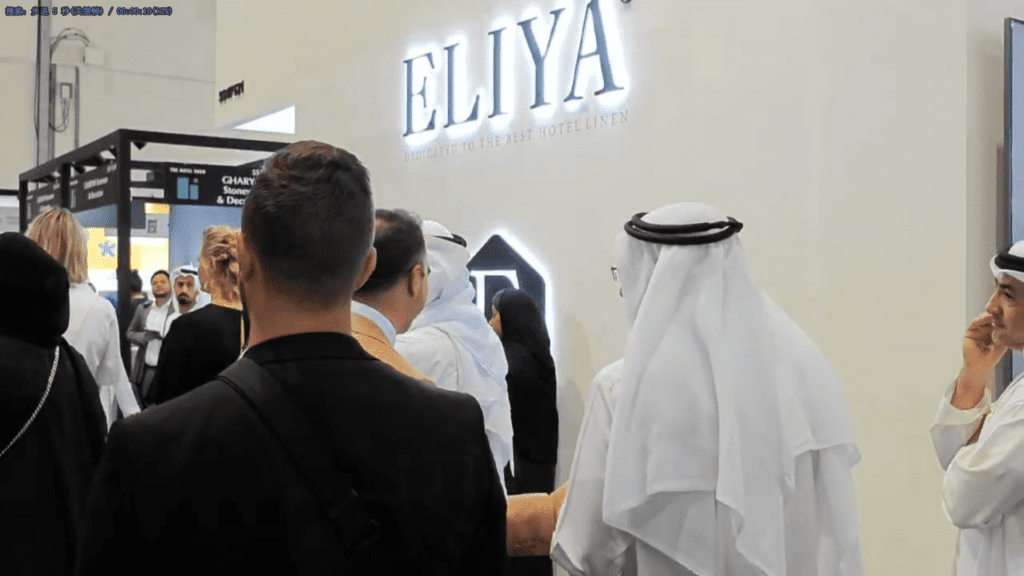
ELIYA&GALAXY DUBAI THE HOTEL SHOW DAY 1
DUBAI THE HOTEL SHOW Already well underway.The booth attracted a large number of customers,have a…
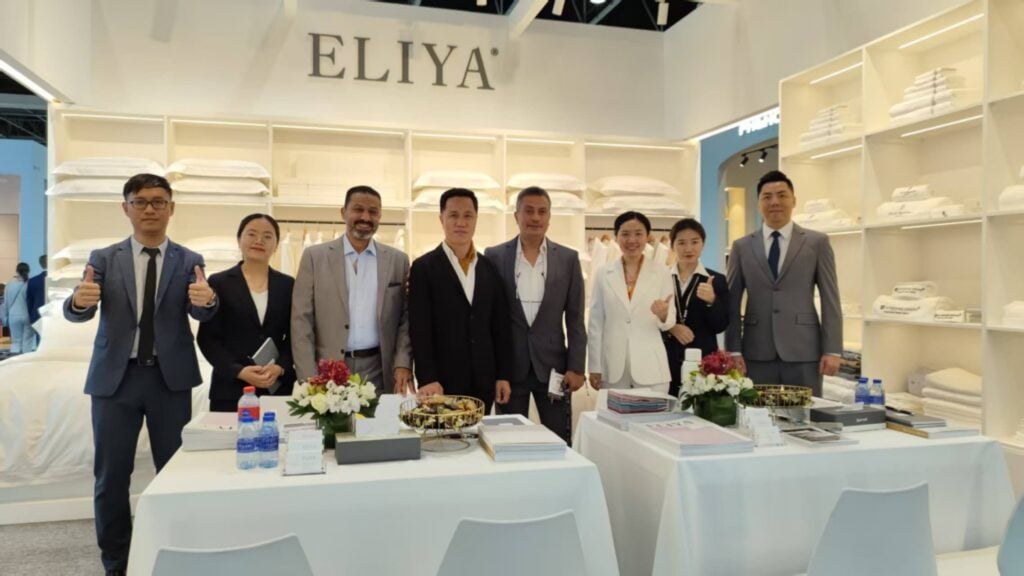
Galaxy Hotel Supplies Shines at The Hotel Show Dubai 2025
Galaxy Hotel Supplies proudly participated in The Hotel Show Dubai 2025, held from May 27…